Gesualdo's family had strong religious ties, including a maternal uncle, Carlo Borromeo, who was canonized in 1610, and a paternal uncle, Alfonso Gesualdo, who was a Cardinal.
Compositional Technique
Gesualdo's sacred music, particularly in the Sacrae Cantiones, shows a desire to assert technical mastery and infuse polyphony with a highly subjective pathos, which was unusual for religious music of the time.
Recording & Production
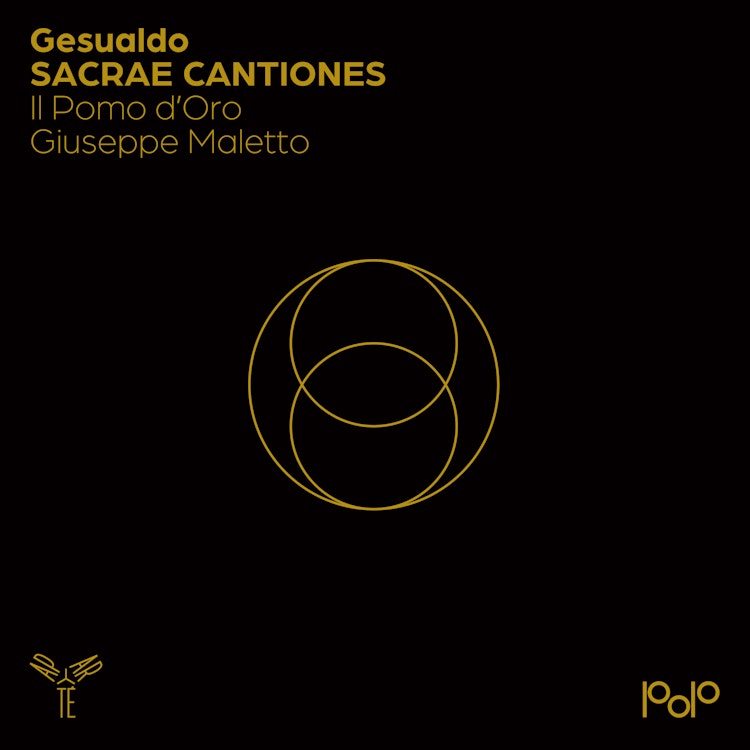
This album was recorded in May 2021 at the Confraternita dei santi Rocco e Sebastiano in Cumiana, Italy, and produced by Giuseppe Maletto.
Interpretation
Modern performances of Gesualdo's Sacrae Cantiones should aim to restore the full range of his chromatic and expressive palette, rather than a sanitized reconstruction of standard late-Renaissance practice.
Composition History
Carlo Gesualdo, Prince of Venosa, published two substantial collections of Sacrae Cantiones in 1603, after having made a name for himself with his madrigals.
Composer's Artistic Vision
Gesualdo's harmonic 'signature' in his sacred works involves sudden shifts, like moving from a G-major triad to a B-major triad, transitioning from liturgical objectivity to madrigalesque subjectivity.
You might also enjoy...
Tallis / Byrd: Cantiones Sacrae 1575
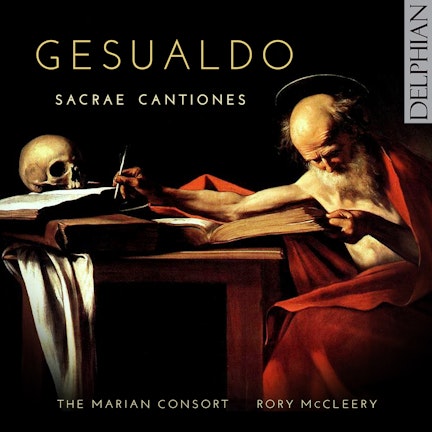
Gesualdo: Sacrae Cantiones
Rore: Sacred & Secular Motets
Taverner: Missa Corona Spinea; Votive Antiphon: O Wilhelme Pastor Bone
Byrd: Tribue, Domine: I. Tribue Domine
De Wert: Motets, Book I (1566)
Lejeune: Dix Pseaumes de David
Victoria: Requiem Mass
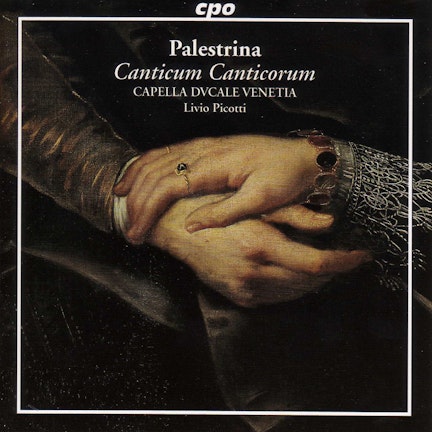
Palestrina: Song of Songs
Codex Speciálník
Missa Christe Jesu: III. Sanctus
Palestrina: Motets, Book 4, "Canticum Cantocorum" (Song of Songs) (1584)