Louis Glass, the composer, came from a musical family; his father, Christian Glass, was a leading piano teacher who founded a private conservatory.
Compositional Technique
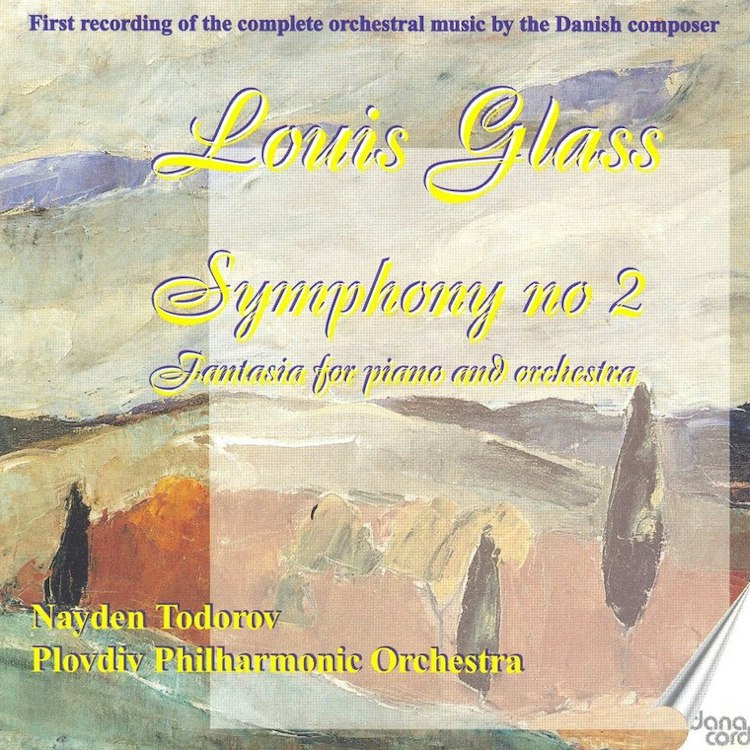
The Fantasia for piano and orchestra by Louis Glass shows an unusual preference for 5/4 time, with the time signature changing nine times in the first twenty bars.
Compositional Technique
Louis Glass's Symphony No. 2 uses a large orchestra, including contrabass tuba, an enlarged percussion group, organ in the finale, and a male-voice choir in the slow movement.
Composer's Artistic Vision
Louis Glass, the composer, believed music was the most spiritual art form because it expresses the inner life of things, acting as a revelation for the receptive mind.
Composer's Artistic Vision
From 1912 onwards, Louis Glass's works, including the Fantasia, were influenced by the philosophy of the theosophical movement, giving them a spiritual background.
Critical Reception
After World War I and the premiere of his 5th Symphony, interest in Louis Glass's music waned, with many considering his style outdated compared to Carl Nielsen.
Composer Biography
Louis Glass, the composer, made his debut as a piano soloist at 18 in Tivoli, playing Schumann's piano concerto, and the following week debuted as a cellist.
You might also enjoy...
Shostakovich : Symphonie No.10
WAGNER, R: Symphony in C Major / Siegfried Idyll (Berlin Radio Symphony, Rogner)
Tchaikovsky: Symphony No.4; Capriccio italien
Brahms: Symphony No.4/Handel Variations & Fugue
Wagner: Vorspiel und Liebestod & Tchaikovsky: Symphony in F Minor No. 4, Op. 36