Wagner: Vorspiel und Liebestod & Tchaikovsky: Symphony in F Minor No. 4, Op. 36
12/14/2018, 5 Tracks, 59:55
Featuring
Dmitry Liss
Philharmonie Zuidnederland
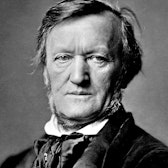
Richard Wagner
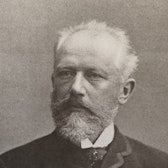
Pyotr Ilyich Tchaikovsky
Did you know?
1/7
Composition History
Wagner began work on Tristan und Isolde in 1857, interrupting his immense tetralogy Der Ring des Nibelungen, and described some of his Wesendoncklieder as studies for it.
Critical Reception
Tchaikovsky's Fourth Symphony was initially misunderstood by critics, with The New York Post calling it 'semi-barbaric' and others describing it as 'enormous noise'.
Composer's Artistic Vision
Richard Wagner considered himself the savior of German Romantic music, aiming to elevate opera to a higher level.
Compositional Technique
In the Prelude to Tristan und Isolde, Wagner pushed classical tonality to its limits, creating a highly chromatic musical language with the 'Tristan chord' which lacks tonal direction.
Composer Biography
Tchaikovsky's Fourth Symphony was composed during a difficult period in his life, following his disastrous marriage to Antonina Miliukova and a suicide attempt.
Composer Biography
Pyotr Ilyich Tchaikovsky, a tormented Russian Romantic composer, was considered too focused on Italian music to be truly Russian, yet too Russian to sound truly European.
Compositional Technique
Tchaikovsky's Fourth Symphony was influenced by Wagner's use of Leitmotiven, a technique for providing a narrative within pure symphonic music.
You might also enjoy...
Glass, L.: Orchestral Music, Vol. 3
Scriabin: Symphony No. 2 & Rêverie
Karlowicz: 'Rebirth' Symphony - Bianca da Molena
Rachmaninoff: Symphony No. 3 in A Minor, Op. 44
Wagner: Sinfonie C-Dur / Siegfried-Idyll
Steinberg: Symphony No.2; Variations Op.2
Berlioz: Symphonie fantastique, Op. 14, H. 48 & Harold en Italie, Op. 16, H. 68
Rachmaninoff: Symphony No. 3 & Vocalise
Tchaikovsky: Symphony No.4/Capriccio italien
Tchaikovsky: Symphony No. 2 in C Minor, Op. 17 & Liadov: Eight Russian Folk Songs, Op. 58
Bischoff, H.: Symphony No. 2 / Introduktion and Rondo