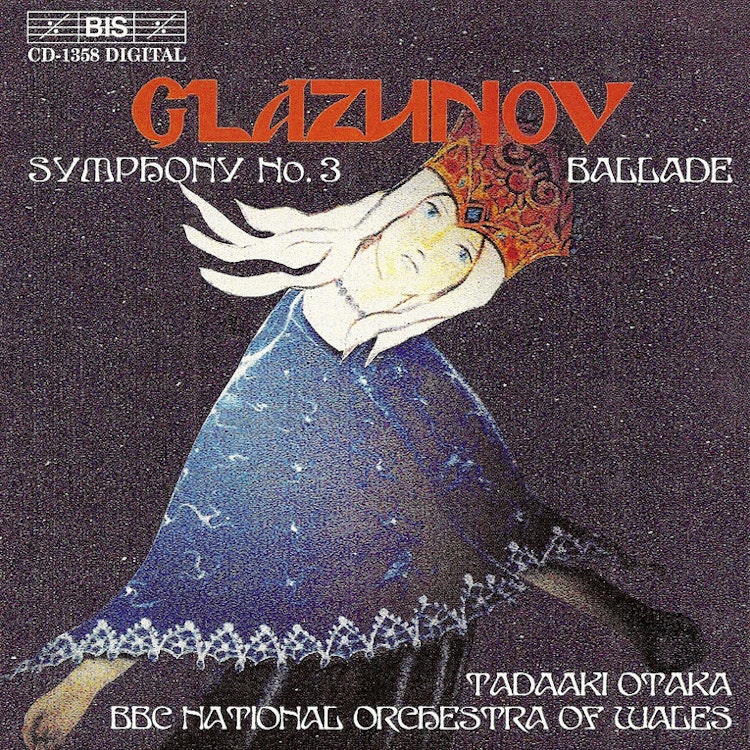
Glazunov's teacher, Nikolai Andreyevich Rimsky-Korsakov, announced after two years of private lessons that Glazunov had become a mature musician and treated the 16-year-old as an equal to his old friends Mussorgsky and Borodin.
Historical Context
Glazunov represented the old Russian intelligentsia, known for his generous support of impecunious students and his deep sympathy for Jews, who were oppressed in Tsarist Russia.
Composer Biography
Despite his tolerance for modern musical tendencies, Glazunov was compelled to leave Russia in June 1928 due to ambitious composers furthering their careers under the Bolsheviks.
Composer Biography
Alexander Glazunov, a child prodigy, was introduced to Mily Alexeyevich Balakirev, who then connected him with Nikolai Andreyevich Rimsky-Korsakov, a contact that was decisive for Glazunov's musical future.
Performer Biography
Tadaaki Otaka, the conductor, comes from a musical family with a conductor/composer father and a pianist mother, and has held principal conducting roles with several orchestras, including the BBC National Orchestra of Wales.
Composer's Artistic Vision
Glazunov's eight symphonies, composed between 1882 and 1907, serve as an encyclopedia of Russian music of the period, representing the classical Russian school and the orientation of the 'Mighty Handful' composers.
Composer Biography
Glazunov became a professor at the St. Petersburg Conservatory in 1899 and its director in 1905, also performing as a conductor of his own works.
You might also enjoy...
Rubinstein: Symphony No. 6
Tchaikovsky: Symphony No. 5 - Capriccio Italien
Rachmaninoff: Symphony No. 1 in D Minor, Op. 13 & Vocalise in C-Sharp Minor
Rachmaninoff: Symphony No. 2 in E Minor, Op. 27 & Vocalise, Op. 34 No. 14 (Remastered 2023)