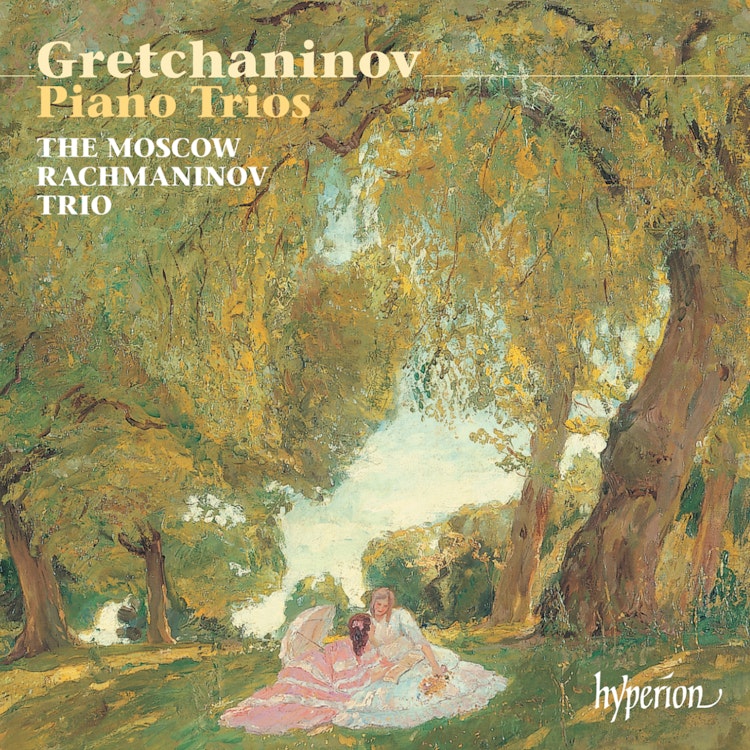
In his piano trios and Cello Sonata, Grechaninov often begins the second subject and even the development in the home key before modulating to remote tonal regions, a tendency perhaps influenced by Chopin.
Compositional Technique
A notable aspect of Grechaninov's compositional approach in these three works is his avoidance of a rondo finale, instead concluding all movements in sonata form.
Historical Context
After the 1917 Revolution, which changed his life, Grechaninov became disenchanted with the Bolshevik government and emigrated to Paris, and later to the United States.
Composer Biography
Aleksandr Grechaninov, the composer, was born in Moscow in 1864 to a modest family, but his musical talent was stimulated by joining school and church choirs.
Composer Biography
Grechaninov became an American citizen in 1946 and died in New York in 1956 at the age of ninety-one, leaving behind 201 works with opus numbers.
Critical Reception
While Grechaninov's sacred music is well-known, his chamber music, including the works on this album, has suffered from neglect and is only now beginning to be rediscovered.
Composer Biography
Grechaninov studied at the Moscow Conservatory with Nikolai Kashkin, a Tchaikovsky intimate, and later with Safonov, Arensky, and Taneyev, before moving to St. Petersburg to study with Rimsky-Korsakov.
You might also enjoy...
Fountain of Youth
Schumann, Shostakovich & Piazzolla: Chamber Music
Three American Piano Trios
Gerhard, Montsalvatge & Cassado: Piano Trios
Beyond The Pacific
Brahms, Shostakovich & Krenek: Works for Violin, Alto Saxophone & Piano
An Evening with the Lowbury Trio
Bohemian Rhapsodies
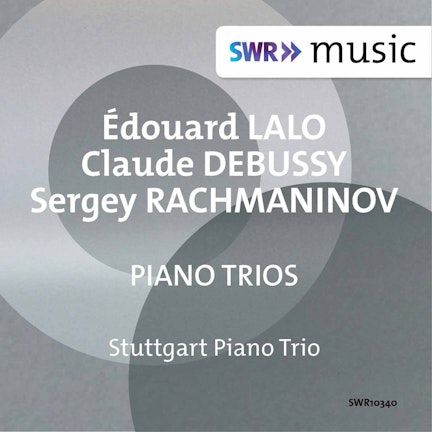
Lalo, Debussy & Rachmaninoff: Piano Trios
Smetana, Shostakovich, Bernstein
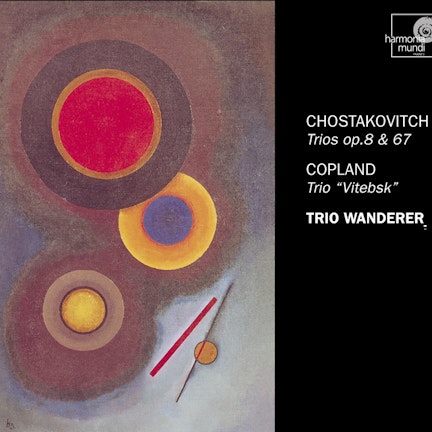
Shostakovich: Piano Trios Op. 8 & 67
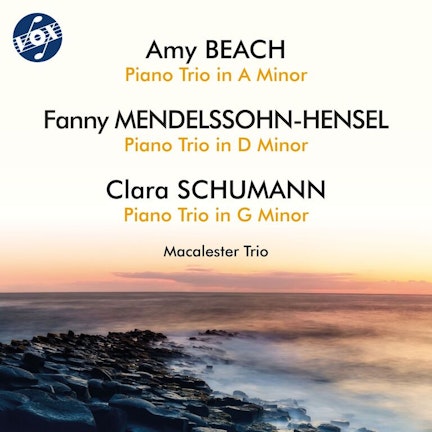
Beach, Mendelssohn-Hensel & C. Schumann: Piano Trios