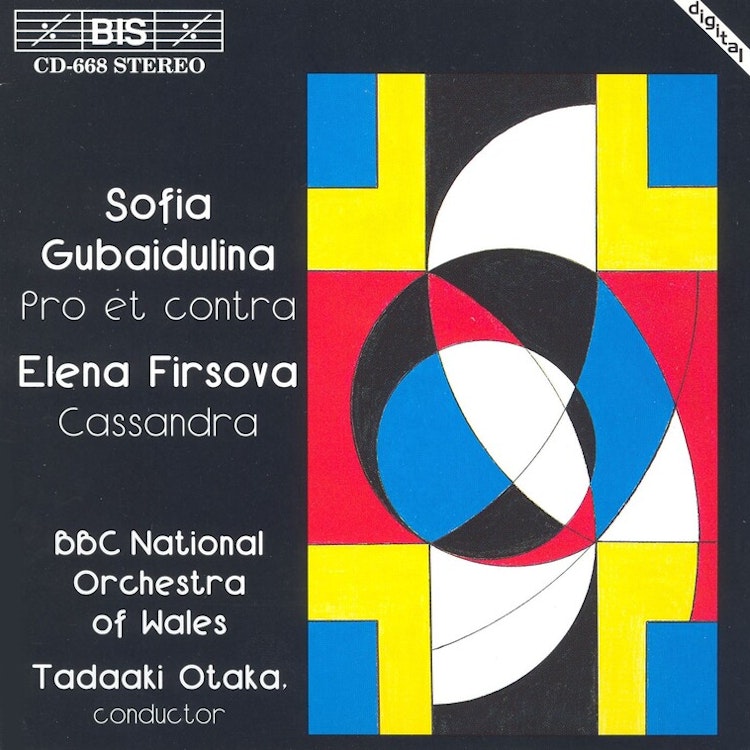
Elena Firsova's 'Cassandra' was inspired not only by the Trojan prophetess but also by the situation in Russia in 1992, where apprehension for the country's future led to concerns for the fate of the world.
Composer Biography
Sofia Gubaidulina, a composer born in 1931 in the Tatar Republic, continued her compositional training with Nikolai Peiko, an assistant of Shostakovich, at the Moscow Conservatory.
Composer Biography
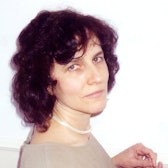
Elena Firsova, a composer born in Leningrad in 1950, established contact with Edison Denisov in 1975, which proved decisive for her development, and through him, she met Philipp Herschkowitsch, a pupil of Webern.
Compositional Technique
In Sofia Gubaidulina's 'Pro et contra', contrasting instrumental combinations are created not only from different orchestral groups but also within groups, such as contrasting the bass drum and tam-tam with bells, celesta, harpsichord, and harps in the percussion section.
Compositional Technique
The melodic material in Sofia Gubaidulina's 'Pro et contra' derives its general significance from the intonation of the ancient Russian 'Allelujah,' with a related theme appearing in the exact middle of the work.
Composer's Artistic Vision
In 1975, Sofia Gubaidulina co-founded the ensemble 'Astreya,' which improvised on rare Russian, Caucasian, and Mid-Asiatic folk instruments, profoundly influencing her compositional output.
Performer Biography
Tadaaki Otaka, the conductor, comes from a musical family; his father was a conductor and composer, and his mother was a pianist.
You might also enjoy...
Lentz: Guyuhmgan - Monh - Ngangkar
Busoni: Berceuse élégiaque
Lasse Thoresen: Lyden av Arktis (The Sound of the Arctic)
Pizzetti: Three Preludes to Sophocles' Oedipus
Ørjan Matre: Konsert for Orkester
Copland: Statements
Aarre Merikanto: Works For Orchestra
Christian Ofenbauer: 2 Frankfurter Préludes (Live)