The libretto for Acis and Galatea draws its story from Dryden's translation of Ovid's Metamorphoses, which appeared in London in 1717.
Interpretation
This recording of Handel's Acis and Galatea is based on the original 1718 version, using a small orchestra and period instruments, with the keyboard continuo shared between harpsichord and organ.
Recording & Production
The recording was made in Rosslyn Hill Chapel, London, in July 1989, using a pitch of A = 415Hz and Thomas Young temperament.
Composer Biography
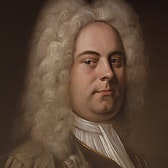
Handel, the composer, initially visited England in 1710 for a twelve-month leave of absence from his Kapellmeister position in Hanover, which was granted by the Elector who was heir to the British throne.
Cultural Impact
Acis and Galatea was one of Handel's most popular works, revived at least seventy times by the mid-18th century, and remained popular after his death, with Mozart re-orchestrating it in 1788.
Composition History
Handel's Acis and Galatea was his second musical setting of the myth, following a serenata titled Aci, Galatea e Polifemo composed in Naples in 1708.
Compositional Technique
Handel made numerous revisions to Acis and Galatea for later revivals, including adding extra movements in Italian, a chorus version of 'Happy we', and increasing the scoring to include violas and even a carillon in 1739.
You might also enjoy...
Handel: Terpsicore - Ballet Scenes from Ariodante
Purcell: Dido & Æneas, Circe
Handel Edition Volume 3 - L'Allegro, Il Penseroso ed il Moderato, Tamerlano, Alcina, Il Pastor Fido, Terpsichore
Rameau: Pygmalion
John Eliot Gardiner Conducts French Baroque Music: Couperin, Rameau, Campra & Leclair