Winner of the BBC Music Magazine Award 2019 (Opera)
Featuring
Christian Curnyn
Lucy Crowe
Rowan Pierce
Allan Clayton
Benjamin Hulett
Jeremy Budd
Neal Davies
Early Opera Company Orchestra
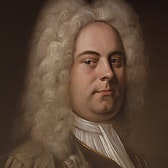
George Frideric Handel
Did you know?
1/7
Recording & Production
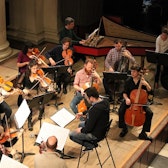
This recording uses historically accurate equal tension stringing for the string players, with most avoiding metal wound strings.
Compositional Technique
Handel's Acis and Galatea is described as his first English masterpiece, blending pastoral, poetic, tragic, and humorous elements in a way he never replicated in English.
Historical Context
After the Earl of Carnarvon's death, his estate, Cannons, where Acis and Galatea was first performed, was pulled down and its contents dispersed.
Composition History
The libretto for Acis and Galatea was likely co-authored by members of the Scriblerus Club, including John Gay, Alexander Pope, and John Hughes.
Compositional Technique
The character of Polyphemus, the monstrous Cyclops, is given humorous musical treatment, including a high-pitched sopranino recorder and clumsy word stresses in his aria 'O ruddier than the cherry'.
Historical Context
The Earl of Carnarvon, Handel's patron for this work, amassed a fortune of £600,000 as paymaster of Queen Anne's army during the War of the Spanish Succession.
Composition History
Handel composed Acis and Galatea for James Brydges, the Earl of Carnarvon, who maintained a private 'Cannons Concert' of musicians at his country estate.