Handel was one of the first composers to break away from the traditional four-movement structure (Allemande, Courante, Sarabande, Gigue) for keyboard suites.
Compositional Technique
Handel incorporated various movement types into his suites, including preludes, fugues, chaconnes, and variations, with one suite (HWV 427) containing no dance movements at all.
Composer Biography
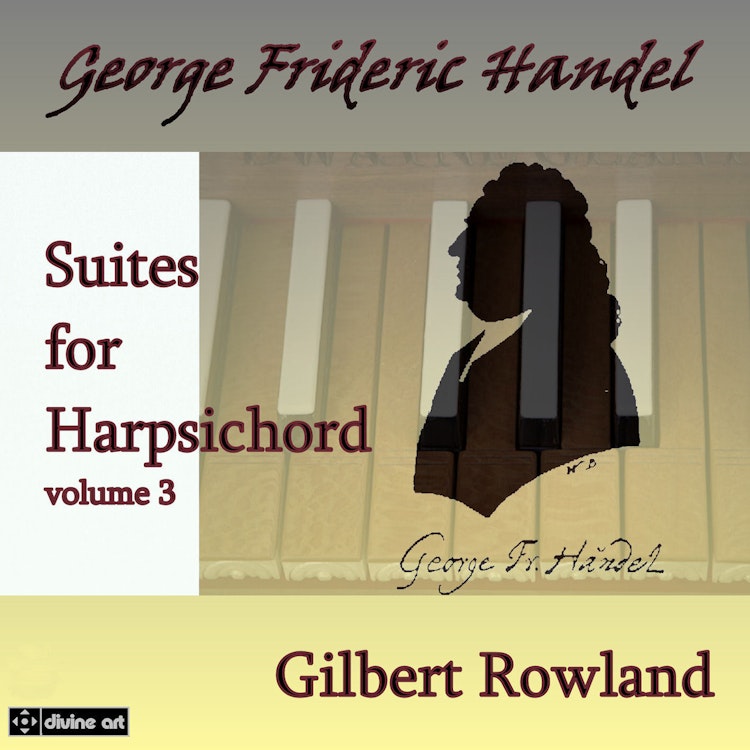
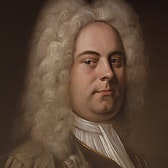
George Frideric Handel's solo keyboard music has been overshadowed by his operas, oratorios, and orchestral works.
Performer Biography
Gilbert Rowland, the harpsichordist on this album, is considered one of Britain's leading harpsichordists, having made his debut in 1970 and performed at Wigmore Hall.
Recording & Production
This album was recorded in Holy Trinity Church, Weston, Hertfordshire, England, using a two-manual French harpsichord by Andrew Wooderson, after a 1750 Goermans instrument.
Composition History
About ten of Handel's suites were likely composed before he moved to Italy in 1707, and two date as late as 1739.
Composition History
Handel published two collections of keyboard suites during his lifetime: the 'Eight Great Suites' in 1720 and 'The Second Collection' of six suites in 1733.