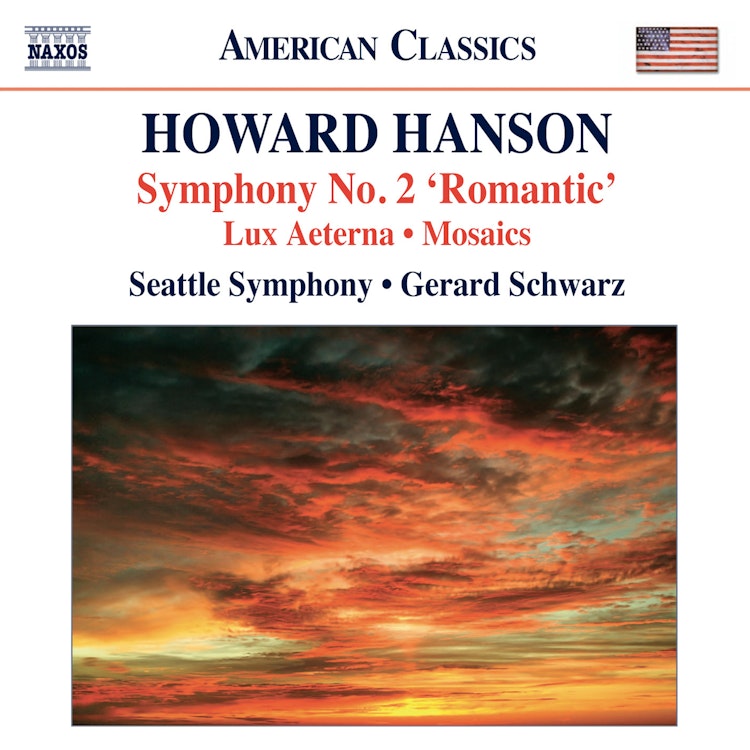
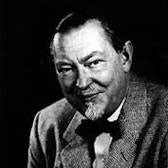
Howard Hanson, born in Wahoo, Nebraska, was the first director of the Eastman School of Music, a famous music school, at the invitation of its founder, George Eastman.
Compositional Technique
Howard Hanson's symphonic poem Lux Aeterna was profoundly influenced by his study of Palestrina, an older Italian composer, and Gregorian chant, leading him to incorporate modal elements into his music.
Cultural Impact
Music from Howard Hanson's Symphony No. 2 'Romantic' accompanies the end credits for the science fiction thriller Alien.
Performer Biography
Gerard Schwarz, the conductor on this album, has a vast repertoire including Germanic, Russian, and American music, and served as Music Director of the Seattle Symphony from 1985 to 2011.
Composition History
Howard Hanson's Lux Aeterna was originally dedicated to the great English violist Lionel Tertis, but he declined to play it, leading to the dedication's removal in a revised version.
Composer's Artistic Vision
Howard Hanson aimed to create music that was "young in spirit, lyrical and romantic in temperament, and simple and direct in expression," believing music is a manifestation of emotions rather than intellect.
Recording & Production
This album was recorded at the Seattle Opera House, with tracks 1-3 recorded in 1988, track 4 in 1994, and track 5 in 1992.
You might also enjoy...
Casella: Orchestral Works
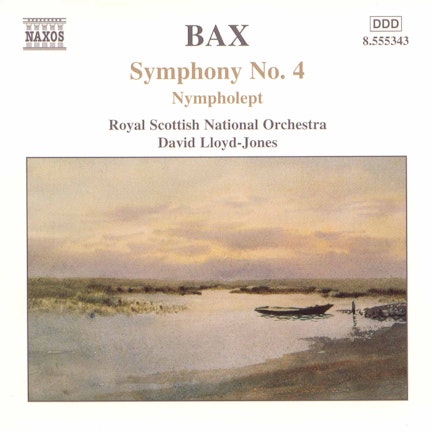
Bax: Symphony No. 4, Nympholept & Overture to a Picaresque Comedy
Bantock: The Cyprian Goddess; Helena Variations; Dante and Beatrice
Symphony No. 7
Ives, C.: Universe Symphony (Completed by L. Austin) / Orchestral Set No. 2 / The Unanswered Question
Bantock: Pagan Symphony; Fifine at the Fair etc.
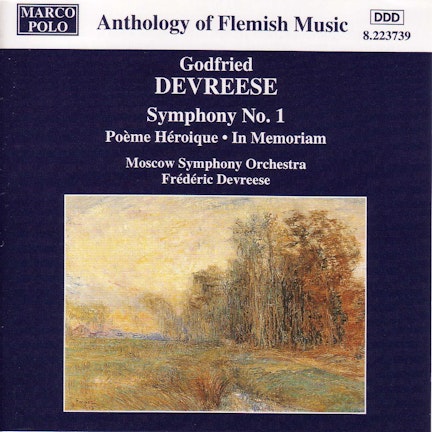
Devreese: Symphony No. 1 / Poeme Heroique
Devreese: Symphony No. 1 / Poeme Heroique
Bax: Symphony No. 6 / Into the Twilight
Zaimont: Chroma - Northern Lights
Bantock: A Celtic Symphony; A Hebridean Symphony; The Witch of Atlas