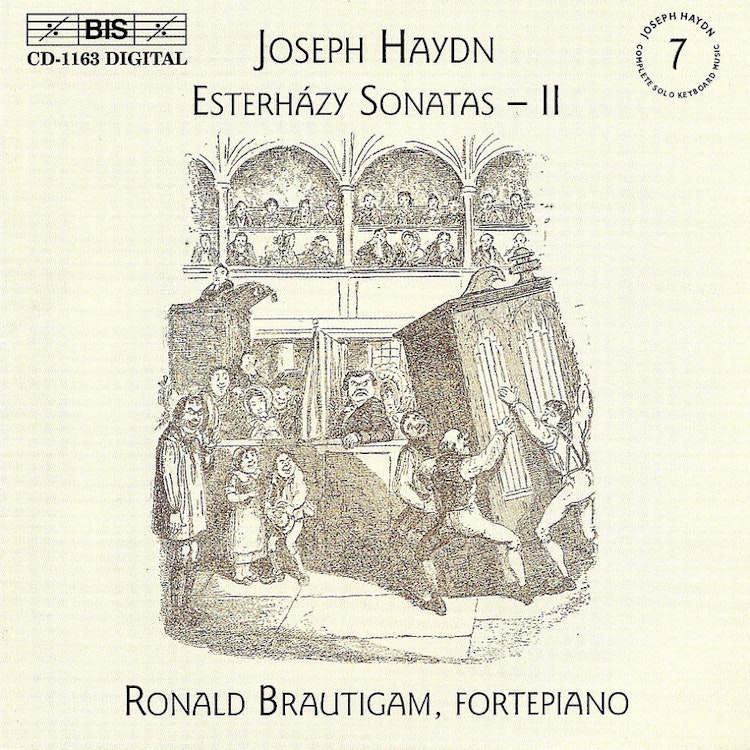
Haydn: Complete Solo Keyboard Music, Vol. 7 - Esterhazy Sonatas Ii
3/31/2003, 11 Tracks, 1:03:01
Featuring
Ronald Brautigam
Joseph Haydn
Did you know?
1/7
Performer Biography
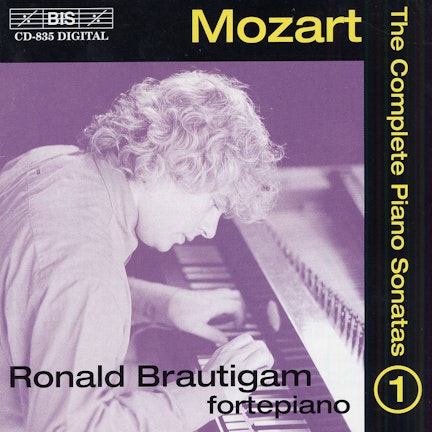
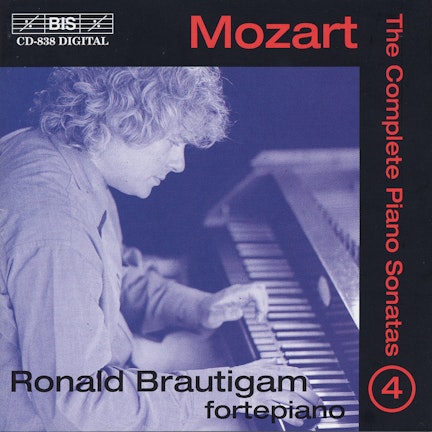
Ronald Brautigam, the fortepiano performer on this album, has a reputation as a leading exponent of the fortepiano, with a particular interest in Mozart's music for the instrument.
Composition History
The six sonatas Nos. 36-41 are known as 'Esterházy Sonatas' because they were dedicated to Prince Nikolaus Esterházy in their first authorized edition by Viennese publisher Kurzböck in 1774.
Composer's Artistic Vision
Haydn's importance in music development is significant; he perfected the string quartet form and made similar contributions to the symphony and piano sonata genres.
Interpretation
The booklet uses 'piano music' and 'piano sonatas' to refer to Haydn's keyboard works, acknowledging that some were for other instruments like the harpsichord, but chose 'piano' for stylistic elegance.
Instruments
The fortepiano used for this recording was made by Paul McNulty in Amsterdam in 1992, modeled after an Anton Gabriel Walter fortepiano from around 1795.
Compositional Technique
Starting with the Esterházy Sonatas, Haydn consistently used the term 'sonata' instead of 'divertimento,' and these works introduced a new court style with a 'proper' slow middle movement.
Composer Biography
In 1805, a rumor of Haydn's death led to funeral sonatas and cantatas being composed, to which the then 73-year-old Haydn humorously remarked he would have attended to conduct the mass himself.