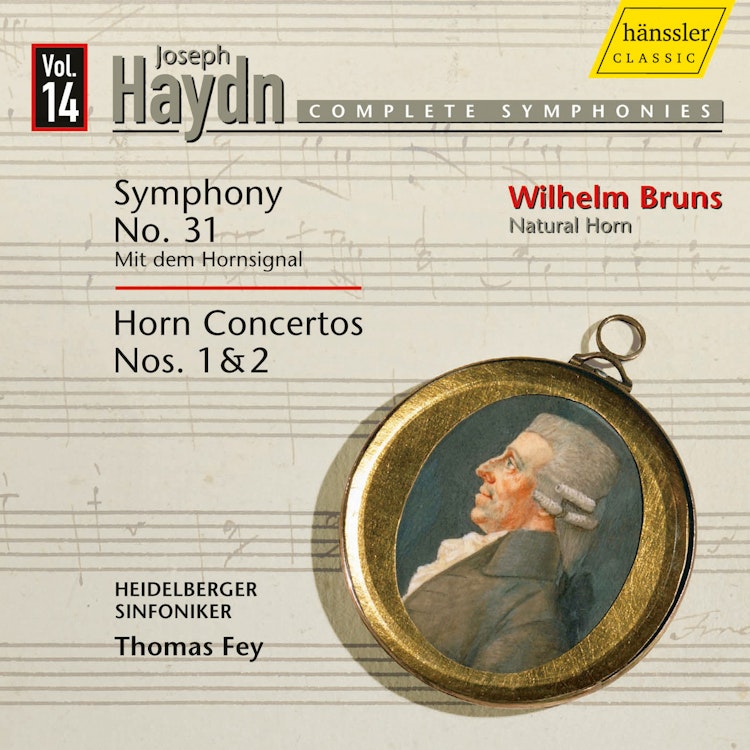
Joseph Haydn, then assistant and later principal court music director, frequently included lyrical and virtuosic solos in his early symphonies, largely due to the skill of violinist Aloysius (Luigi) Tomasini.
Historical Context
In 1765, Prince Nikolaus von Eszterházy specified the duties and salary for his new hornist, Joseph Dietzl, Jr., in a detailed contract.
Performer Biography
Wilhelm Bruns, the soloist on this recording, has been the solo hornist at the National Theater in Mannheim since 1988 and is a specialist in playing the valveless natural horn.
Compositional Technique
The Symphony No. 31, 'with the horn signal,' features a D Minor episode instead of a literal recapitulation, indicating a programmatic element with a postillon and jubilant signals.
Interpretation
The Heidelberger Sinfoniker, founded by Thomas Fey, are known for their historically informed performance practice, which was influenced by Nikolaus Harnoncourt.
Composition History
Haydn composed three symphonies—No. 31, No. 39, and No. 72—that prominently feature a quartet of natural horn players, including Thadeus Steinmüller, Carl Franz, Franz Steinmetz, and Joseph Dietzl.
Composition History
The Horn Concerto 'No. 2' recorded here is considered apocryphal by scholars, with its authenticity questioned due to a more limited harmonic spectrum and uncharacteristic carelessness compared to Haydn's other works.
You might also enjoy...
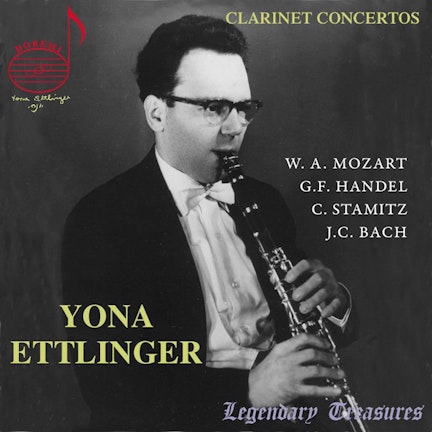
Yona Ettlinger Vol. 1: Clarinet Concertos
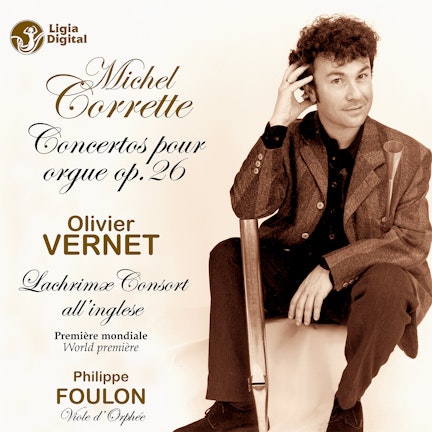
Corrette : Six concertos pour orgue, Op. 26
Diversity
Bach
Sardelli: 6 Sonate a Tre
Vivaldi: Le Quattro Stagioni & La Follia
Around Mozart. A Journey Through the Golden Age of the Oboe Quartet
Piazzolla: Adios Nonino, Libertango, Coral & La Muerte Del Angel
Into Nature - Vivaldi Seasons and Other Sounds from Mother Earth
El cant de la Sibilla: Sacred Music from medieval Catalunya