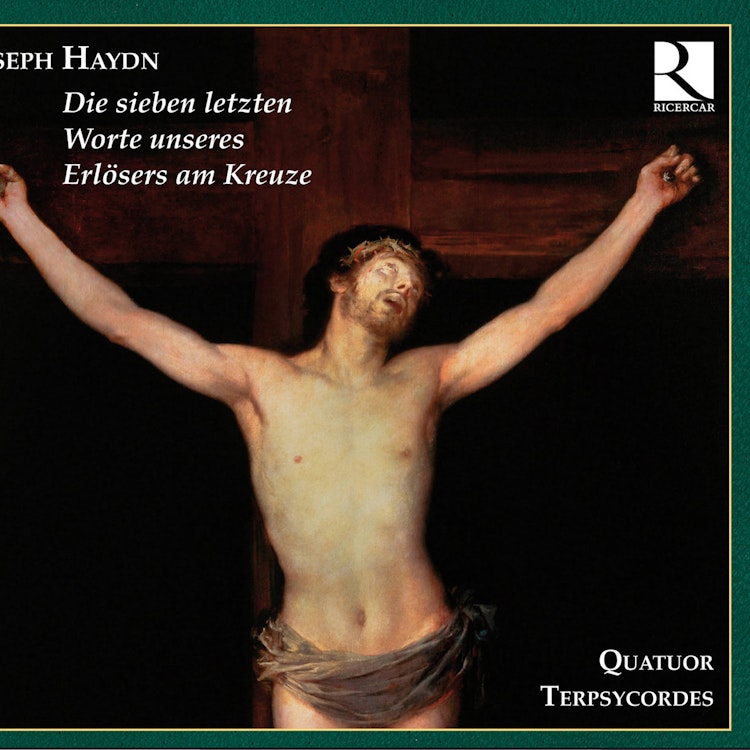
Haydn: Die sieben letzten Worte unseres Erlösers am Kreuze
4/1/2013, 9 Tracks, 1:04:21
Featuring
Girolamo Bottiglieri
Raya Raytcheva
Blythe Teh Engstroem
François Grin
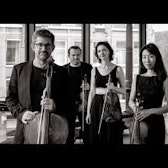
Quatuor Terpsycordes
Joseph Haydn
Did you know?
1/7
Composer's Artistic Vision
Haydn intended the instrumental music for each sonata to make a profound impression on the soul of every listener, regardless of their background.
Compositional Technique
The work concludes with a sudden "Terremoto" (earthquake) movement, a Presto e con tutta la forza, which abruptly breaks the meditative state induced by the preceding slow movements.
Interpretation
The instruments used by Quatuor Terpsycordes for this recording are set up for historical performance with gut strings and tuned to A=422 Hz, and they use "classical" bows inspired by late 18th-century English makers.
Composition History
Joseph Haydn's "The Seven Last Words of Christ on the Cross" was originally commissioned by a canon from Cadiz for an annual Lenten oratorio performance in the Cadiz Cathedral.
Composition History
Haydn's work was designed to accompany a unique Good Friday service where an officiating bishop would comment on each of the seven 'Words,' with music filling the intervals.
Compositional Technique
A significant challenge for Haydn in composing this work was to create seven successive adagios, each lasting about ten minutes, without tiring the listener.
Instruments
For this recording, the Quatuor Terpsycordes performs on instruments from the Vuillaume studio of luthiers, including copies of a Guarnerius del Gesù and the Stradivarius Messiah.
You might also enjoy...
Mozart: String Quartets No. 22 & 23
Haydn: String Quartets Vol. 2
Haydn: Die sieben letzten Worte unseres Erlösers am Kreuze
The Auryn Series, Vol. 30
Haydn: String Quartets Op. 71, Apponyi Quartets
Haydn: String Quartets Vol. 4
Haydn: Prussian Quartets, Op. 50 Nos. 1-3 (On Period Instruments)
Haydn: String Quartets, Op. 9
Haydn: String Quartets Op. 42 and Op. 2, Nos 4 and 6
Haydn: Complete String Quartets, Vol. 1/3
Haydn: String Quartets, Op. 17
Haydn: String Quartets Nos. 23, 24 and 27, 'sun Quartets'