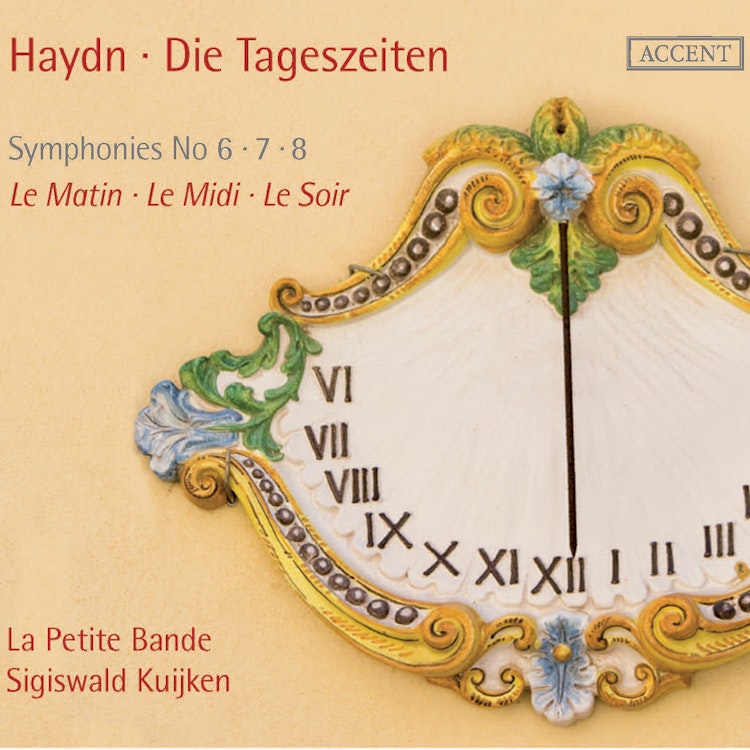
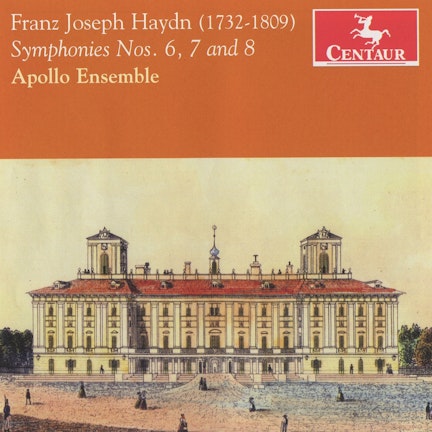
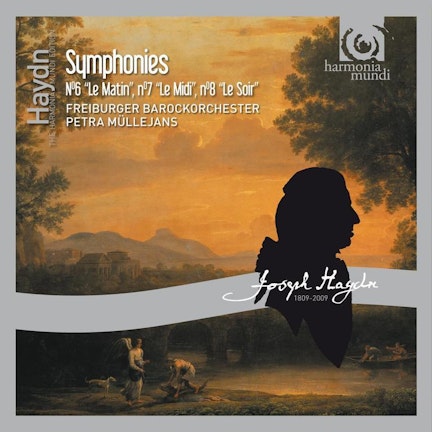
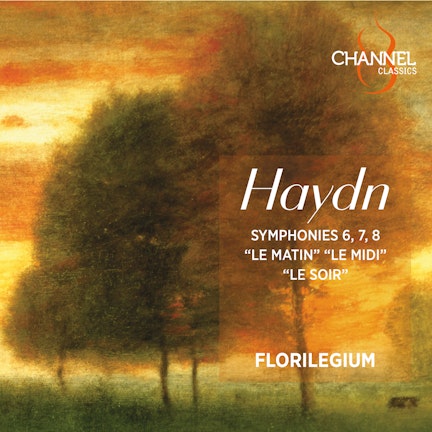
Haydn's Symphonies Nos. 6, 7, and 8 uniquely synthesize musical material and genres, fusing characteristics from the symphony, serenade, and Baroque concertos for several instruments.
Historical Context
During performances of symphonies at Eisenstadt, no harpsichord was used, and Haydn directed the ensemble from the violin, a practice supported by the lack of figured bass in original manuscripts.
Performer Biography
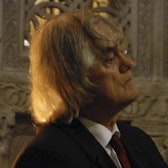
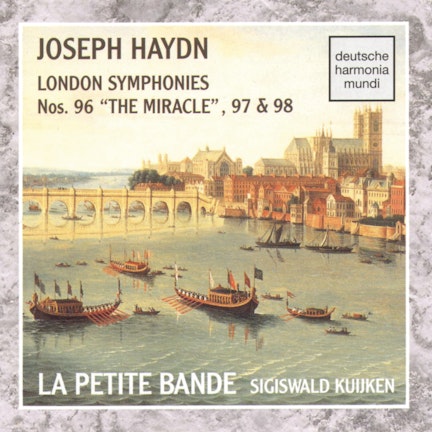
Sigiswald Kuijken, the conductor of La Petite Bande, introduced a historically authentic way of playing the Baroque violin in 1969, where the instrument rests on or under the collarbone, rather than between the chin and shoulder.
Compositional Technique
The slow movement of Symphony No. 7, 'Le Midi', is structured as a dramatic scena ed aria, a style from Italian opera seria, featuring a recitative for solo violin and a duet for violin and cello.
Composer's Artistic Vision
Haydn's employer, Prince Eszterházy, was satisfied with his compositions, allowing Haydn to experiment as an orchestra leader, observing what enhanced or detracted from the musical impression.
Composition History
Haydn was appointed Vice-Kapellmeister for the aristocratic Eszterházy family in 1761, a role that involved reorganizing and expanding the princely court ensemble.
Interpretation
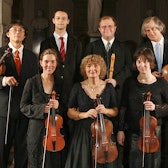
La Petite Bande was founded in 1972 by Sigiswald Kuijken to revive music authentically, using period instruments and original playing techniques to achieve a sound faithful to the original.
You might also enjoy...
Haydn - Sym. 93, 94 & 95
Haydn: Symphonies Nos. 6, "Le matin", 7 "Le midi" & 8 "Le soir"
Haydn: Symphonies Nos. 6, 7 & 8
Haydn: Symphonies Nos.6-8
Haydn: Sym. 96, 97, 98
Haydn: Symphonies Nos. 76, 77 & 78
Haydn: Symphonies Nos. 6, 7, 8 "Le Matin", "Le midi", "Le Soir"