The 'Farewell' Symphony concludes with an Adagio where musicians gradually stop playing, snuff out their candles, and leave, until only Haydn and the leading violinist, Luigi Tomasini, remain.
Composition History
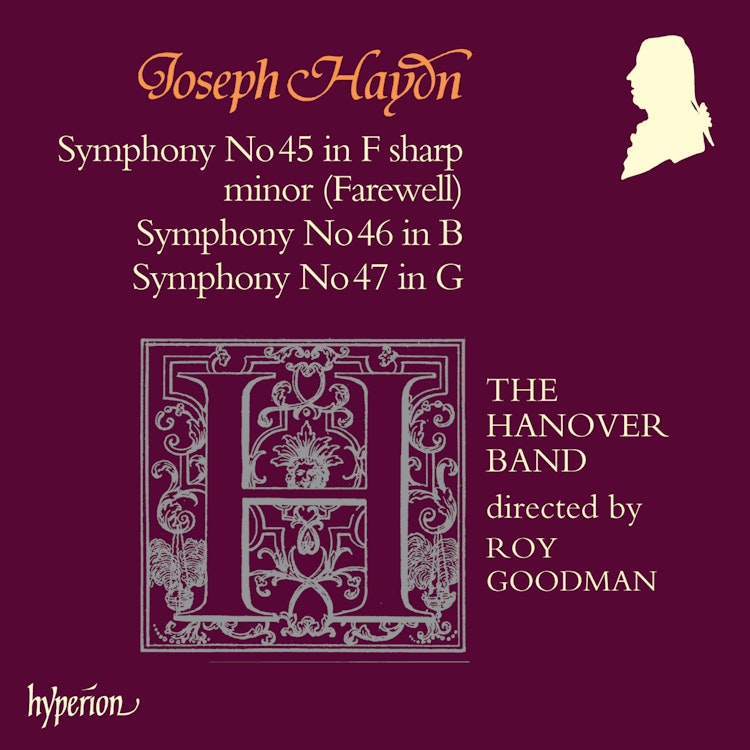
All three symphonies on this album, Nos. 45, 46, and 47, date from 1772, a period when Haydn's originality became truly manifest.
Compositional Technique
Haydn's Symphony No. 47 features a unique 'reversible' Minuet, where each section is designed to be followed by its exact mirror-image.
Interpretation
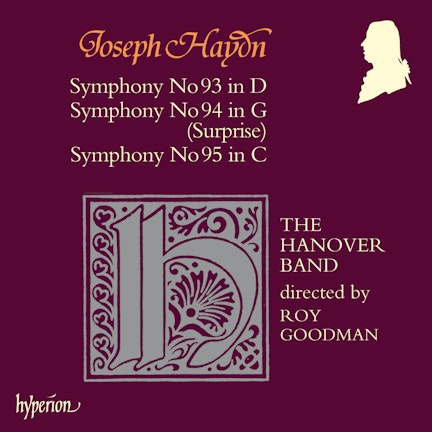
The Hanover Band performs these symphonies on period instruments at a pitch of A = 430Hz, with the violins divided on opposite sides.
Composer's Artistic Vision
Haydn believed his isolation at the Esterházy court fostered his originality, allowing him to experiment and take risks without outside interference.
Composer Biography
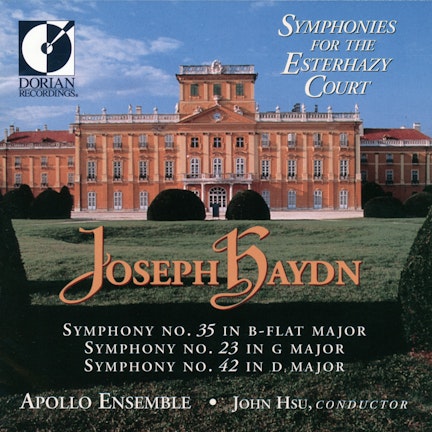
By the early 1770s, Joseph Haydn, the composer of these symphonies, had been in the service of Prince Nikolaus Esterházy for a decade, living and working at his castles.
Composition History
Symphony No. 45, known as the 'Farewell' Symphony, was composed as a plea to Prince Esterházy to allow his musicians to return to their families in Eisenstadt.