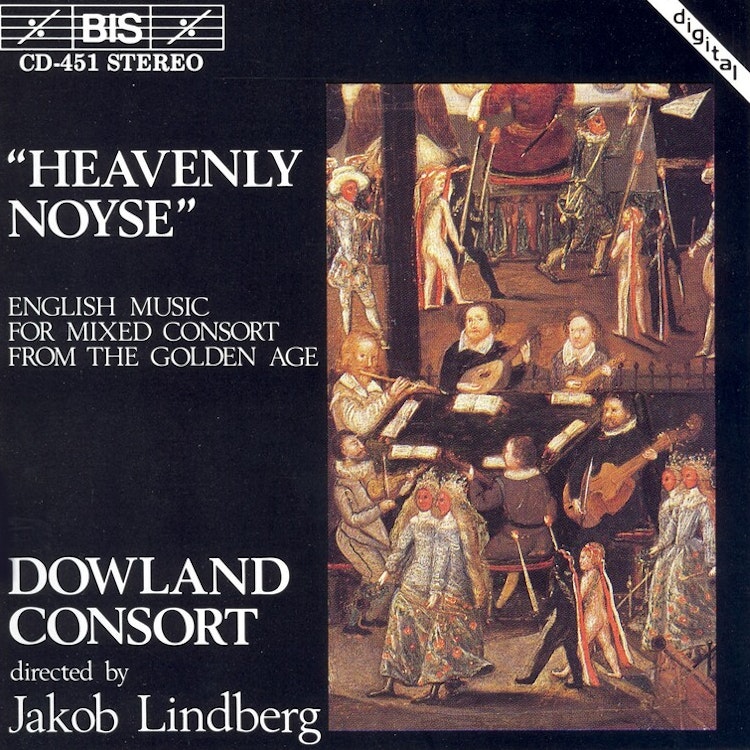
The Dowland Consort, formed in 1985, specializes in English consort music from the 16th and 17th centuries, aiming to recreate the 'heavenly noyse' described by Elizabethans.
Historical Context
The consort was also used for royal and noble entertainments, such as when Queen Elizabeth I visited manor houses during her Royal Progresses in the late 16th century.
Compositional Technique
The term 'broken music' described the technique of breaking down long note-values into smaller ones, forming elaborate divisions, often found in treble viol, flute, and bass viol parts.
Composer Biography
Tobias Hume, a keen viol player, served as a mercenary officer in both the Swedish and Russian armies, yet described himself as 'addicted to Musicke'.
Instruments
The orpharion, a metal-strung instrument featured on this recording, is believed to be an English invention, similar to the bandora, and shares the same tuning as the lute.
Compositional Technique
The 'consort of six' was a uniquely English practice combining six instruments: lute, bandora, bass-viol, cittern, treble-viol, and flute.
Historical Context
This 'consort of six' music was often played in public theatres from a hidden gallery above the stage, between acts or during plays.
You might also enjoy...
Aquila altera
Sacred Treasures of Christmas: Music for Christmas, Epiphany & Candlemas
Lasso: Prophetiæ Sibyllarum
Migali: Sonate, Op. 1
Passaggi da Napoli a Venetia
Wie schön leuchtet der Morgenstern
Ossesso
Venecie mundi splendor: Marvels of Medieval Venice
Eternal Echoes
Hagios
Fürchtet euch nicht: Bassoons & Bombards, Music from the German Baroque
DIVISION: The Virtuoso Consort (Works by John Jenkins)