The Deutsches Magnificat is Schütz's last work, written in 1671, and is described in one manuscript source as his 'finale and swansong'.
Historical Context
Schütz's middle period of composition was marked by minimalism due to the complete breakdown of music at the Court in Dresden and throughout Protestant Saxony during the Thirty Years War (1618-48).
Composer Biography
Heinrich Schütz, the composer, is known as 'the father of German music' and his works fall into three identifiable periods.
Composition History
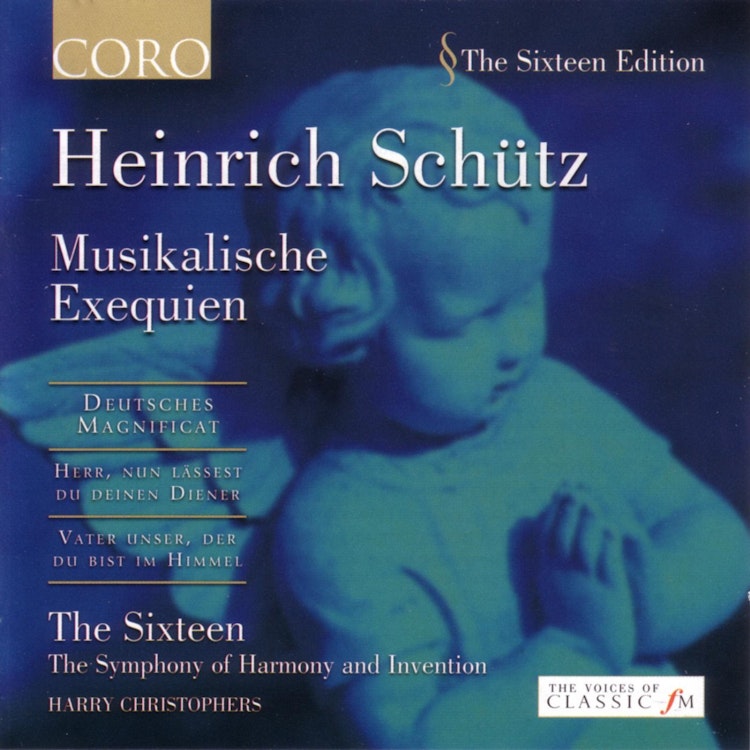
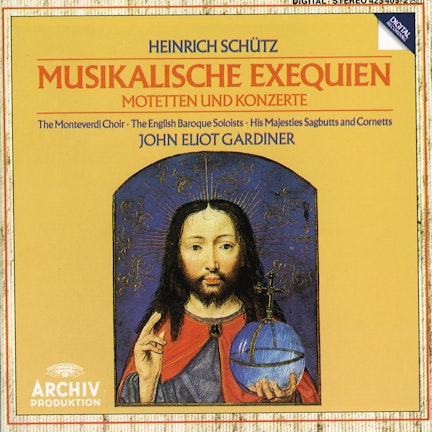
The Musikalische Exequien, meaning 'Funeral Music', was first performed at the funeral of aristocrat Heinrich Posthumus Reuß in February 1636, with texts chosen in advance by the prince.
Performer Biography
The Sixteen, led by founder Harry Christophers, is recognized as one of the world's greatest vocal ensembles, with a reputation for early English polyphony, Renaissance masterpieces, and 20th-century music.
Compositional Technique
The third part of Musikalische Exequien features three voices representing two seraphs and the blessed spirit of the departed, floating in imitation over the Nunc dimittis sung by the main choir.
Composition History
Prince Heinrich Posthumus Reuß, for whom the Musikalische Exequien was written, was a keen singer and Schütz added special bass parts for him to participate in performances during his lifetime.
You might also enjoy...
Schütz: Musikalische Exequien
Praetorius and Italy
Jubilate Deo!
Bright Orb of Harmony
Purcell: Funeral Sentences & Hail! Bright Cecilia
Art choral vol. 2: Baroque I
Schütz: Johannes-Passion
Schütz: Johannespassion, SWV 481
Mexican Baroque
Schütz: Motets and Concertos
Schütz, Praetorius, Schein & Demantius: 17th Century Funeral Music