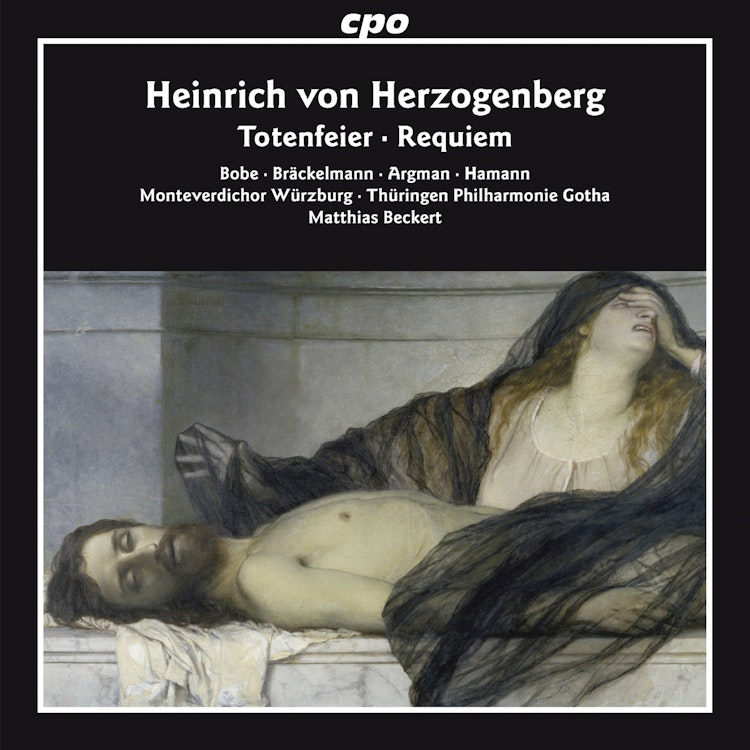
Herzogenberg, a Catholic-raised composer, moved to Berlin in 1885 to teach at the Royal Music College, a post arranged by Philipp Spitta, a famous Bach biographer and chancellor of the college.
Critical Reception
Johannes Brahms, a friend of Herzogenberg, found the Requiem to be a "desolate piece," likely due to its C minor key, while Herzogenberg's wife Elisabeth praised it as "beautiful, mature, simple, and intelligible."
Notable Performances
The premiere of Herzogenberg's Requiem took place on February 22, 1891, at St. Thomas's Church in Leipzig, a venue significant for its association with J.S. Bach.
Composition History
Herzogenberg composed his Todtenfeier (Commemoration of the Dead) as a way to cope with the grief of losing his wife Elisabeth, completing it exactly one year after her death.
Composer's Artistic Vision
Heinrich von Herzogenberg is unique in music history for addressing the theme of death through three distinct text types: a Catholic Mass for the Dead, a Lutheran cantata using German biblical texts, and his own poem.
Compositional Technique
Herzogenberg's Requiem, like Cherubini's 1816 Requiem in C minor, was conceived without extroverted soloists, focusing instead on the choir.
Composition History
Herzogenberg composed his Requiem in an incredibly short time, which his wife Elisabeth believed contributed to its unified, flowing, and singable quality.
You might also enjoy...
Mendelssohn: Works for Choir & Orchestra
Rheinberger: Missae et Cantiones
Rheinberger: Musica sacra, Vol. 4
Mendelssohn Edition Volume 4 - Choral Music
The Secret Fauré 3: Sacred Vocal Works
Amazing Grace: American Hymns & Spirituals
Heavenly Voices
Welcome Christmas: Carols & Lullabies from Around the World