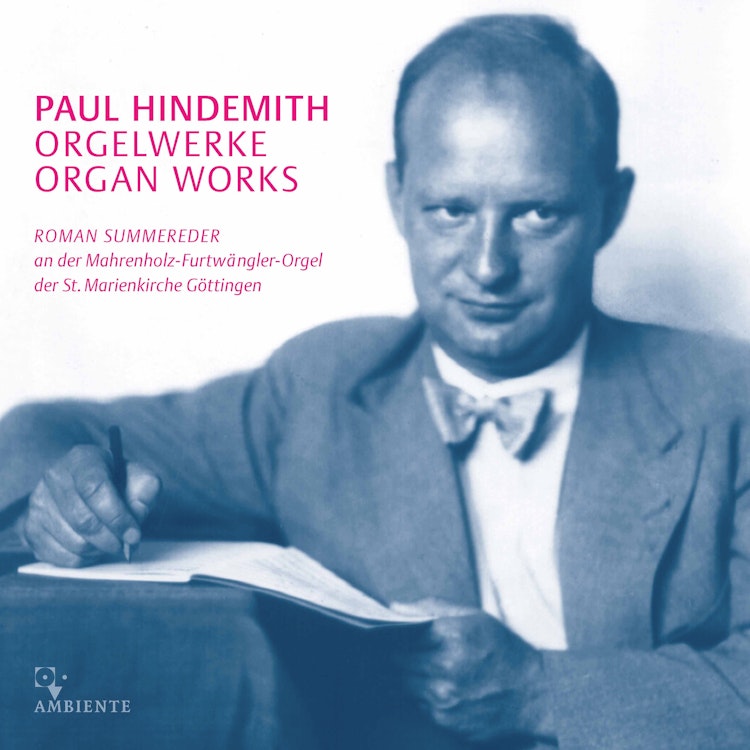
Paul Hindemith, the composer, was drafted into military service in January 1918, serving as a drummer in the regimental band and a salon pianist in the officers' casino.
Composer's Artistic Vision
Hindemith disliked 'soft and spongy' giant organs, preferring clear and sensible dispositions with pure and sharply defined voices, as he stated in a letter to organ builder Weigle.
Performer Biography
Roman Summereder, the organist on this recording, was the last student of Anton Heiller, for whom Hindemith composed his 'Concerto for organ and orchestra' in 1962/63.
Instruments
The Mahrenholz-Furtwängler Organ, built in 1925/27, was designed to combine classical and romantic sound ideals, not as a historical reconstruction but as an original artistic work.
Historical Context
The Nazi regime banned Hindemith's works in October 1936, and he emigrated to Switzerland in September 1938, then to the USA in February 1940, due to persecution.
Composition History
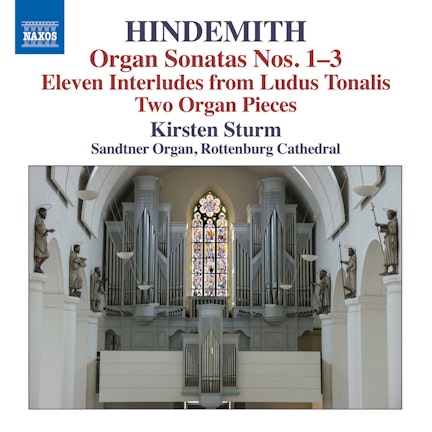
Hindemith's Organ Sonata III, composed in American exile, is considered an autobiographical document reflecting his anguish during the period his wife, Gertrud, was delayed in Europe due to World War II.
Composition History
The two early organ pieces by Hindemith, composed in 1918, were considered lost until they reappeared at an auction in 1998 and were published in 2006.
You might also enjoy...
Jean-Baptiste Dupont: Improvisations
Lemmens: Organ Music
Hindemith: Works for Organ
Kühmstedt, van Eyken, Reubke for Organ
Fink: The Great Organ Works
Persichetti: Organ Works
Boëllmann, Reger & Others: Organ Works
Anton Heiller: Complete Organ Works, Vol. 1
Canadian Organ Music on the Organ of Coventry Cathedral