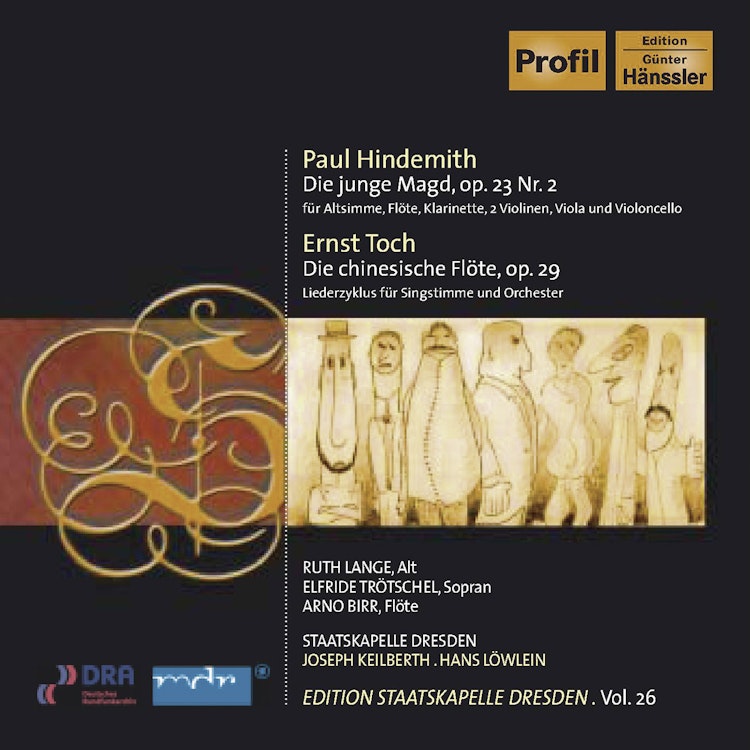
Ernst Toch, one of the composers on this album, called himself the "most thoroughly forgotten composer in the whole world" in the 1960s, despite his fame in the 1920s.
Critical Reception
After World War II, there was a strong desire in Dresden to hear unfamiliar works, including those by composers like Ernst Toch whose music had been banned during the Third Reich.
Historical Context
The recordings on this album were made in Dresden shortly after World War II, when the city was largely destroyed and still recovering.
Composer's Artistic Vision
Hans Bethge, whose German adaptations of Chinese poetry inspired Ernst Toch's 'Die chinesische Flöte', aimed to capture the exotic atmosphere and intonation rather than produce literal translations.
Recording & Production
The recordings were made in a provisional studio in the almost undamaged wing of the German Hygiene Museum, as the Dresden radio station worked to restore broadcasting services after the war.
Performer Biography
Elfride Trötschel, a soprano on this recording, was an orphan at 8 years old and later became a permanent member of the Staatsoper Dresden ensemble.
Recording & Production
The recording equipment used for this album, including microphones and tape recorders, dated back to the early 1940s and belonged to the former Reichsrundfunk (German national broadcasting organization).
You might also enjoy...
Ghost Songs
Peter and the Wolf
Egk: Der Revisor
Glenn Gould über Johann Sebastian Bach
J.S. Bach: Wege zur Musik
Dirigenten bei der Probe: Mariss Jansons probt Mahler Symphonie Nr. 5
Giuseppe Verdi: Das Wahre erfinden, Eine Hörbiografie von Jörg Handstein