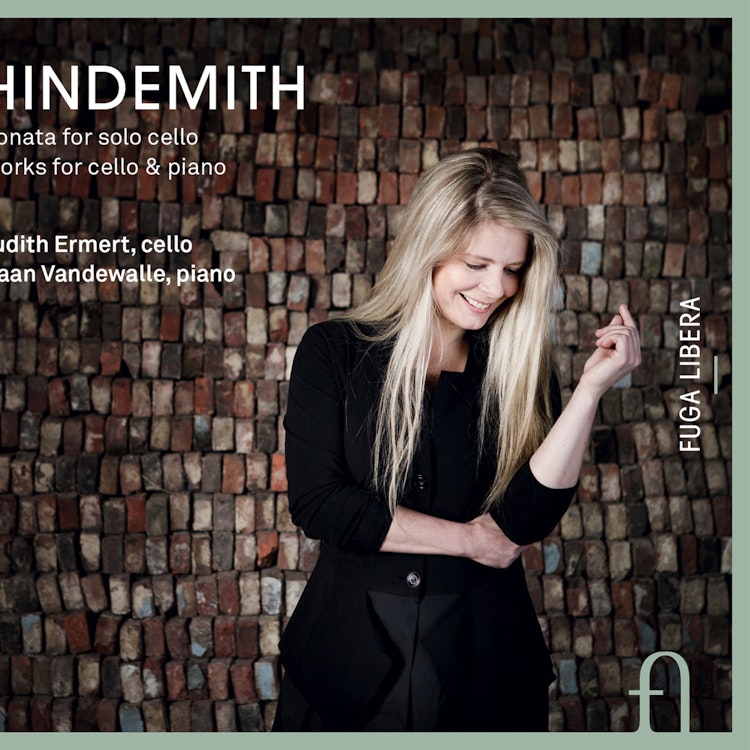
Hindemith: Sonata for Solo Cello - Works for Cello & Piano
11/19/2013, 11 Tracks, 1:04:08
Featuring
Judith Ermert
Daan Vandewalle
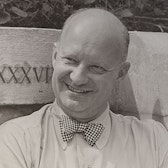
Paul Hindemith
Did you know?
1/7
Composer Biography
In the early 1920s, Hindemith's career rapidly advanced not only as a composer but also as a performer; he founded the Amar Quartet, in which he played viola, and it became one of the most successful quartets of the decade.
Composer's Artistic Vision
Hindemith was very proud of his first publication, humorously writing to a friend that the 'Hindemith' on the title page could 'as easily have 'Beethoven' written on it!'
Compositional Technique
The early Op. 8 cello pieces show influences of Late Romanticism, with the second piece ('Phantasiestück') resembling Brahms or Richard Strauss, and the third ('Scherzo') following Max Reger's chromatic density.
Composition History
Hindemith composed his Sonata for Solo Cello, Op. 25 No. 3, in one evening during the Donaueschingen Music Festival, noting, 'We had a competition in writing cello sonatas; I wrote four movements that evening.'
Composition History
Hindemith's Three Pieces for Cello and Piano, Op. 8, premiered in March 1917 and immediately attracted attention, leading to his first publication.
Composer Biography
Paul Hindemith's interest in the cello as a solo instrument was sparked early on, likely by his younger brother Rudolf, who was an excellent cellist as a child.
Compositional Technique
Hindemith's "A Frog He Went A-Courting" (1941) is a theme with twelve variations that musically mirrors details from the children's song, such as the galloping rat, the humming bumblebee, and the winding snake.
You might also enjoy...
Approaching Autumn
Poulenc / Fauré / Chopin: Pieter Wispelwey and Paolo Giacometti