The viola d'amore, a delicate instrument, was almost entirely pushed aside in the 19th century due to larger orchestras, concert halls, and increasing chromaticism in music.
Recording & Production
The harpsichord used for this recording is a 'dinosaur' from Hindemith's time, found dormant in the SWR radio studio in Stuttgart, and features pedals and damper registers.
Performer Biography
Gunter Teuffel, the solo violist on this album, has been the principal violist of the Radio Symphony Orchestra Stuttgart since 1982 and a professor at the State University of Music and Performing Arts in Stuttgart since 2000.
Compositional Technique
For his Chamber Music No. 6, Paul Hindemith wrote the solo viola d'amore part in scordatura, a historical notation method where the notes are written differently from how they sound, similar to 18th-century practice.
Compositional Technique
Paul Hindemith's arrangement of H. I. F. Biber's Partita for two violas d'amore includes a virtuosic harpsichord part that borrows and develops motifs from the violas, enriching the work.
Instruments
The viola d'amore played by Gunter Teuffel on this CD was custom-built for Paul Hindemith in 1926 by Eugen Sprenger and features a head sculpted in the likeness of Hindemith's wife, Gertrud.
Composer Biography
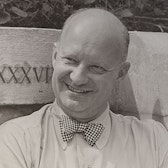
Paul Hindemith, a revolutionary young composer, discovered the viola d'amore in 1922 and began intensively studying ancient music.