Sándor Veress, a successor to Zoltán Kodály at the 'Franz Liszt Music Academy,' settled in Bern, Switzerland, in 1949 and significantly influenced subsequent generations of Swiss composers.
Composer's Artistic Vision
Ferenc Farkas, one of Hungary's most productive 20th-century composers, based his Notturno Op. 2 on musical field studies, collecting folk melodies with an old-fashioned phonograph.
Historical Context
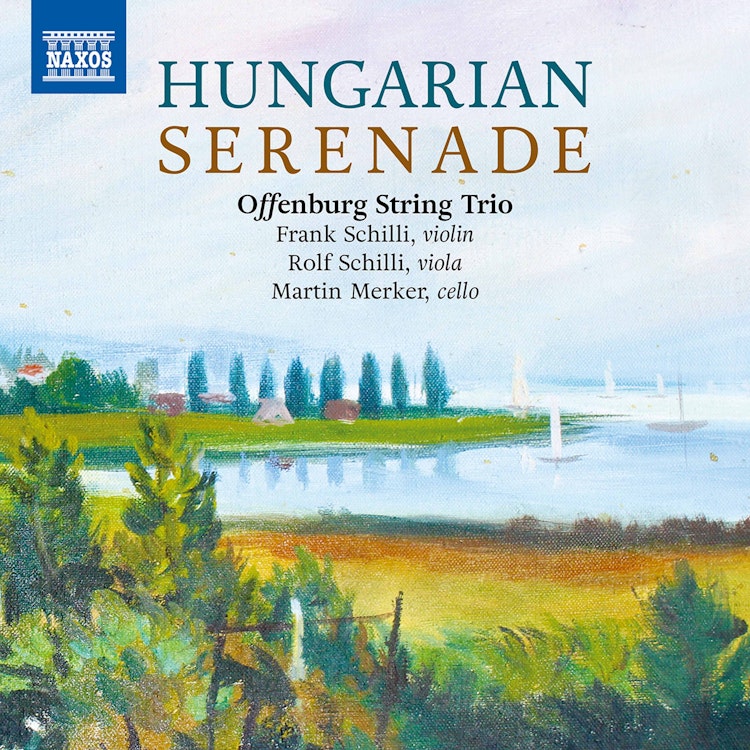
This album features works by a generation of Hungarian composers who faced significant challenges, including anti-Semitism, works being deemed 'degenerate art,' and accusations of 'modernistic formalism' under communist rule.
Composer Biography
Géza Frid, a student of Bartók and Kodály, actively participated in collecting folk songs in the countryside before fleeing Hungary for the Netherlands, where he miraculously evaded detention during German occupation.
Performer Biography
The Offenburg String Trio, founded in 1981, has received awards in international chamber music competitions and performed across Europe, Brazil, India, Vietnam, Thailand, and Cambodia.
Composer Biography
László Weiner, a student of Zoltán Kodály, died at the age of 28 in the forced labor camp Łuków in Poland, just months after his marriage.
Composer's Artistic Vision
Many composers on this album, following in the footsteps of Béla Bartók and Zoltán Kodály, based their musical renewal on the systematic study of forgotten Hungarian folk music.