Ikon, Vol. 1: Sacred Choral Music from Russia & Eastern Europe
9/29/2023, 17 Tracks, 1:19:07
Featuring
Sarah Blood
James Bowman
Stephen Layton
Rebecca Hickey
The Holst Singers
Georgy Vasil'yevich Sviridov
Alexander Gretchaninov
Viktor Kalinnikov
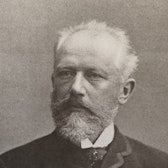
Pyotr Ilyich Tchaikovsky
Arvo Pärt
Henryk Mikołaj Górecki
Knut Nystedt
Did you know?
1/7
Recording & Production
The recording of Knut Nystedt's "Immortal Bach" features singers spread randomly around the church, performing at five different speeds to create a blurred effect, inspired by an Estonian choir.
Critical Reception
Tchaikovsky's Liturgy, Op. 41, from which "The Cherubic Hymn" and "We hymn Thee" are taken, caused controversy in Church circles, with some critics calling it a 'sacred opera'.
Composition History
Georgy Sviridov circumvented Soviet-era prohibitions on sacred works by composing three sacred choruses as incidental music for Alexis Tolstoy's historical drama, Tsar Feodor Ioannovich.
Historical Context
In Russia, the Orthodox Church has always adhered to the early Christian principle of exclusively vocal performance, enriching the vocal ideal with Western European harmony and counterpoint.
Composer's Artistic Vision
The composers on this album, including Peter Ilyich Tchaikovsky, Victor Sergeyevich Kalinnikov, Alexander Tikhonovich Gretchaninov, Georgy Vasilyevich Sviridov, Henryk Górecki, Arvo Pärt, and Knut Nystedt, share a fascination with rich choral sonority as a medium for spiritual musical experiences.
Compositional Technique
Peter Ilyich Tchaikovsky expanded the timbral and textural palette of Russian choral sound by using wider ranges, richer textures, six- and eight-part writing, and timbral contrasts between voice groups.
Composer Biography
Georgy Sviridov, a giant among Russian choral composers of the Soviet era, carried on the tradition of spirit-imbued choral art from the pre-1917 Moscow Synodal School.