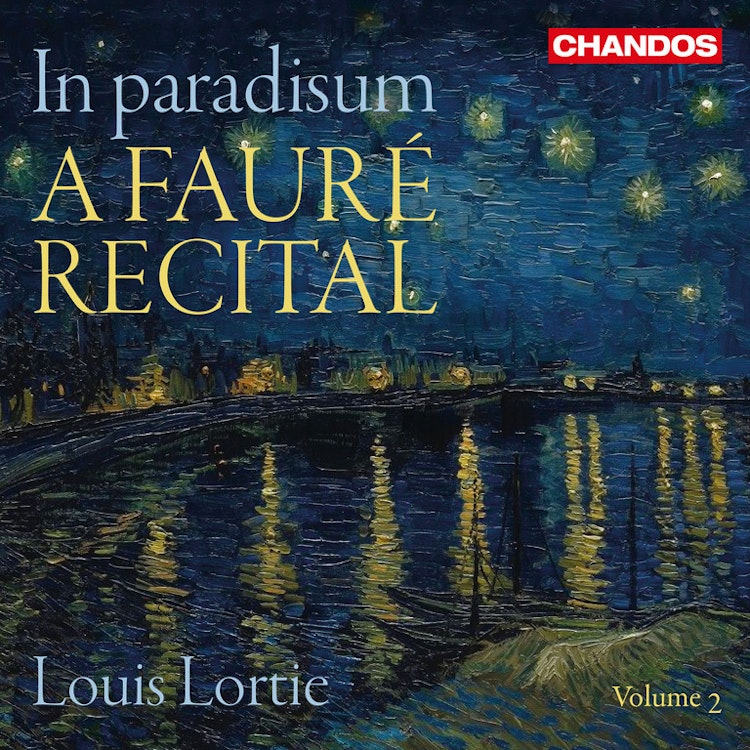
The second volume in Canadian pianist Louis Lortie’s survey of Gabriel Fauré’s solo piano works includes the Ballade Op. 19 and the Thème et variations Op. 73 – works which respectively reveal the influences of Liszt and Schumann. Lortie also includes a selection of miniatures, as well as his own transcriptions from the composer’s famous Requiem.
BBC Music Magazine Choice
Featuring
Louis Lortie
Gabriel Fauré
Did you know?
1/7
Recording & Production
This recording uses 24-bit / 96 kHz technology, which offers a dynamic range up to 48 dB greater and 256 times the resolution of standard 16-bit recordings, aiming for a better sound reproduction.
Composer's Artistic Vision
Fauré viewed death as a "joyful deliverance" and an "aspiration towards a happiness beyond the grave," a perspective reflected in his Requiem.
Compositional Technique
Fauré's Thème et variations in C sharp minor, Op. 73, was inspired by Schumann's Études symphoniques in the same key, but Fauré maintained the key for ten of his eleven variations, unlike Schumann.
Performer Biography
Louis Lortie, the pianist on this album, is a French-Canadian artist who has released over forty-five recordings with Chandos Records over three decades, covering repertoire from Mozart to Stravinsky.
Composer Biography
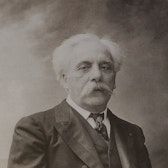
Gabriel Fauré, despite his long life, never composed a piano concerto or a piano sonata, preferring genres that allowed for combination and conversation rather than 'progress through opposition'.
Compositional Technique
Fauré's ambidexterity likely influenced his piano writing, particularly his preference for significant left-hand activity, which makes his Thème et variations challenging for pianists.
Composition History
Fauré's Requiem, Op. 48, premiered in a five-movement version in 1888 at the Madeleine church in Paris, where he was organist, for the funeral of a wealthy parishioner.
You might also enjoy...
Fauré: Piano Music
Fauré: Piano Music
Fauré: The Complete Music for Piano
Fauré: Piano Music
Fauré: Requiem op. 48 (in a new version for piano)