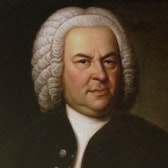
Johann Sebastian Bach spent almost his entire life within a small area of his native Thuringia and neighboring Saxony, working as a violinist, keyboard virtuoso, consultant for organ-building, teacher, and composer.
Compositional Technique
Each suite follows a standard structure of four dance-derived movements (allemande, courante, sarabande, gigue), supplemented by an initial prelude and a pair of 'galant' courtly dances.
Composition History
The Six Solo Cello Suites were composed around 1720 during Bach's employment as Kapellmeister to the Prince of Anhalt-Cothen, a period when he was focused on instrumental music.
Instruments
Suite No. 6 is written for a five-stringed instrument, most probably the 'viola pomposa', an instrument said to have been invented by Bach himself.
Compositional Technique
The Cello Suites are arranged in increasing order of complexity, from the relative simplicity of No. 1 to the almost violinistic virtuosity required for No. 6.
Historical Context
At the time of their composition, the cello was rapidly gaining popularity and beginning to eclipse the viola da gamba as a solo instrument, despite having very little solo repertoire of its own.
Compositional Technique
Suite No. 5 is unique in the set, being the only true 'French' suite, and requires a 'scordatura' (re-tuning) of the top string from A to G.
You might also enjoy...
Bach: Cello Suites Nos. 2, 4 & 6
J.S. Bach: The Cello Suites According to Anna Magdalena