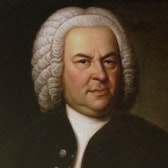
While Bach's motets were viewed as purely a cappella pieces in the early 19th century, theoretical reports from Bach's time indicate that instruments could also be used to support or enrich the sung parts.
Cultural Impact
The Bach Renaissance in the early 19th century began with these motets, highlighting their significant role in the rediscovery of Bach's works.
Performer Biography
Matthias Jung, the conductor of the Saxon Vocal Ensemble, started his artistic career as a musical assistant for the Tölz Boys' Choir.
Composition History
The motet 'Der Geist hilft unser Schwachheit auf' BWV 226 was composed for the funeral of Professor and Rector Ernest, which took place on October 20, 1729, in St. Paul's Church in Leipzig.
Historical Context
Bach's motets are unique because they belong to a genre that was already past its peak in the early 18th century, making them a retrospective highlight of an antiquated form.
Notable Performances
Wolfgang Amadeus Mozart heard Bach's motet 'Singet dem Herrn ein neues Lied' BWV 225 during a visit to Leipzig, noting that 'a whole orchestra would have to be added to it'.
Recording & Production
This album was recorded in two sessions: July 2000 for BWV 227 and September 2000 for BWV 225, 226, 228, and 229.