The violin used for this recording was made by Matthuys Hofmans in Antwerp around 1676, and the bow by Luis-Emilio Rodriguez-Carringto in The Hague in 2006.
Compositional Technique
The Sonatas and Partitas combine extreme virtuosity with a German love for complex contrapuntal textures, especially in the fugal movements.
Compositional Technique
The three sonatas follow the four-movement Italian model (slow-fast-slow-fast) and are analogous to Corelli's violin sonatas 'in church style'.
Compositional Technique
The D minor Partita is dominated by the Chaconne, a closing movement that is considered perhaps the most striking work for violin before the nineteenth century.
Compositional Technique
The preludes to the G minor and A minor sonatas feature extremely florid ornamentation over a simple chordal structure, with Bach's elaborations being mandatory rather than advisory.
Compositional Technique
The C major prelude expands from one to four voices in its opening five measures, sounding like a string sinfonia.
Composition History
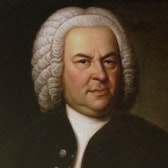
Bach's Sonatas and Partitas for solo violin were completed in Cöthen in 1720, representing the peak of the German tradition for unaccompanied violin.
You might also enjoy...
The Heifetz Collection; Volume 17; Bach: Sonatas & Partitas
Bach: Sonatas and Partitas for Solo Violin
The Heifetz Collection; Volume 17; Bach: Sonatas & Partitas
J.S. Bach: Sonatas and Partitas for Solo Violin
Ning Feng - J.S. Bach: Partitas and Sonatas for solo violin
Bach, J.S.: Violin Sonatas and Partitas (Complete)
Solace
J.S. Bach: Sei Solo - The Sonatas and Partitas
Bach: The Six Sonatas and Partitas for Solo Violin
Bach: Sonatas and Partitas for Solo Violin
J.S. Bach: Sonatas & Partitas for solo violin
Bach, J.S.: Sonatas and Partitas for Solo Violin, Bwv 1001-1006
Bach: Sonatas & Partitas for Solo Violin, BWV 1001-1006