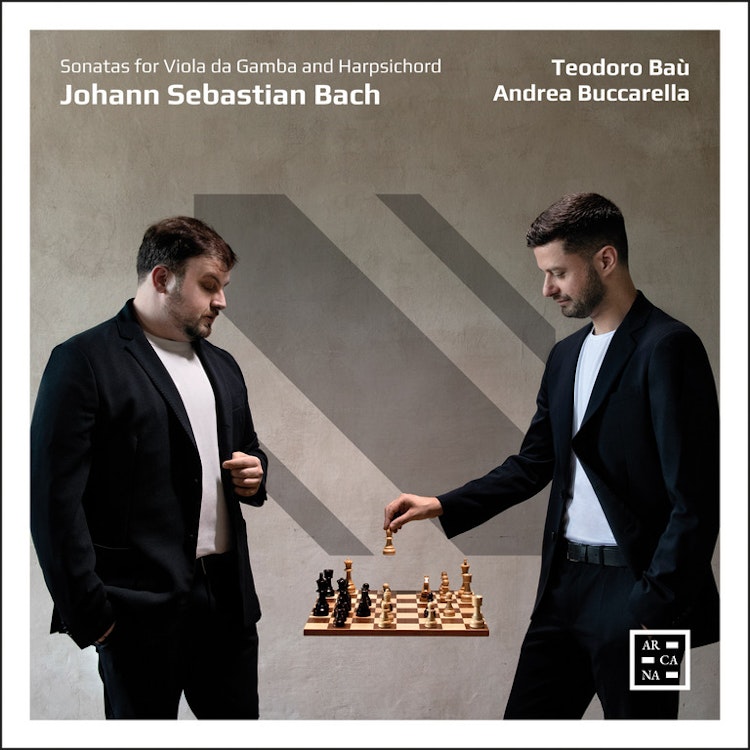
J. S. Bach: Sonatas for Viola da Gamba and Harpsichord
11/7/2025, 15 Tracks, 57:52
Featuring
Teodoro Baù
Andrea Buccarella
Johann Sebastian Bach
Did you know?
1/7
Composer's Artistic Vision
Bach's sonatas with obbligato harpsichord show a clear preference for the harpsichord as an autonomous counterpart, rather than mere harmonic support, dialoguing equally with another instrument.
Composer's Artistic Vision
Bach's use of the 'cantabile' indication for the harpsichord in Sonata BWV 1029 suggests his desire for the plucked instrument to sing like a bowed string instrument, opening new artistic horizons.
Composition History
Bach's sonatas for viola da gamba and harpsichord were pivotal in the instrument's first revival in the second half of the 19th century, after only a few decades of obscurity.
Compositional Technique
Bach's sonatas for melodic instrument and obbligato harpsichord are notable for their quantity, with 11 authentic works listed in the Bach-Werke-Verzeichnis.
Compositional Technique
Bach sometimes indicated basso continuo figures in the bass part when the harpsichord's upper part was silent, inviting the harpsichordist to add chords to complete the harmony.
Interpretation
The performers on this album consider Bach's rigorous counterpoint in these sonatas to create a balance akin to a chess game, where each instrument's move is precisely counterbalanced by the other.
Compositional Technique
Bach's sonatas with obbligato harpsichord often feature a trio arrangement, where the harpsichord's right hand dialogues equally with the melodic instrument, while the left hand provides an active accompanying bass.
You might also enjoy...
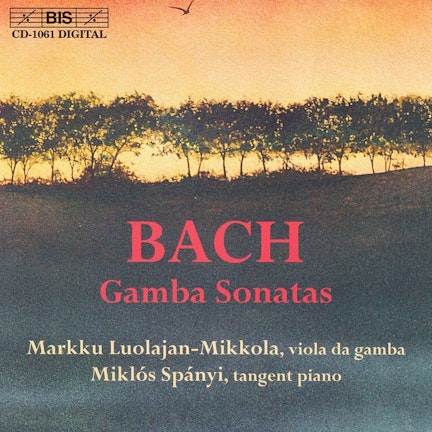
Bach, J.S.: Sonatas for Viola Da Gamba and Harpsichord
Jean-Marie Leclair: Quatrième Livre Vol.1
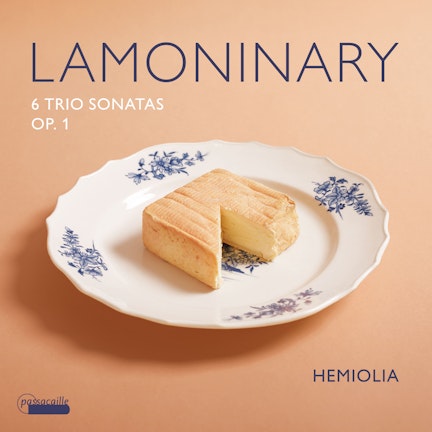
Lamoninary: 6 Trio Sonatas, Op. 1
Bach: Sonatas, Chorales & Trios
Wien Am Hofe Leopolds I
London circa 1740: Handel's musicians
The Italian Album
La rosa e la dea
Telemann: Trio Sonatas
Telemann: Chamber Works
Transition baroque : Joseph Bodin de Boismortier (Trente et Unième œuvre & Œuvre Cinquantième)