The Colares Taskin harpsichord, originally owned by Clotilde of France, sister of King Louis XVI, survived the French Revolution and Napoleonic wars by being in Italy.
Compositional Technique
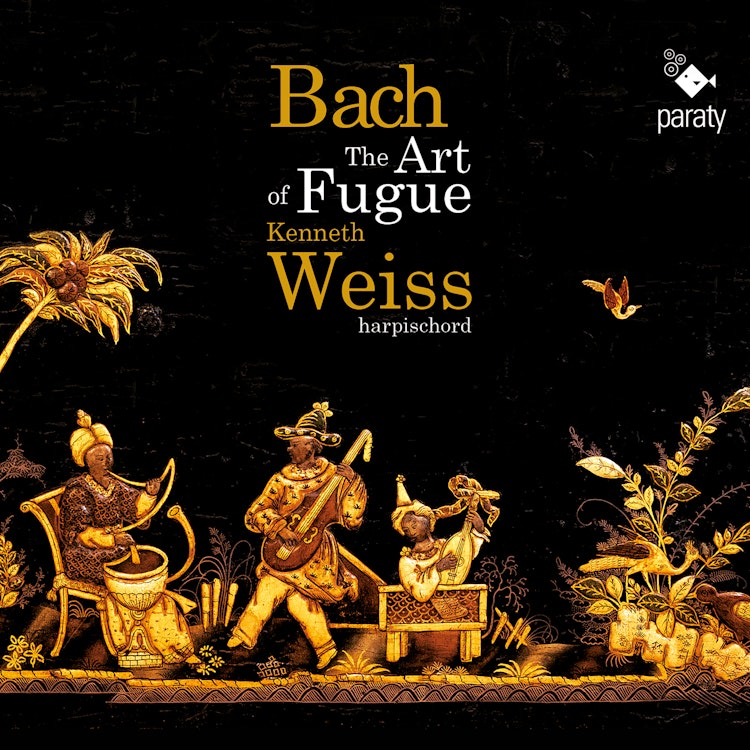
Bach's The Art of Fugue, composed in the last decade of his life, consists of 14 fugues and 4 canons based on a single subject, demonstrating all possibilities of fugal composition.
Composition History
The final fugue of The Art of Fugue, Contrapunctus XIV, is incomplete and includes Bach's musical signature: the notes B-flat, A, C, and B-natural (H in German), spelling B-A-C-H.
Instruments
The harpsichord used for this recording, known as 'The Colares Taskin,' was built in 1782 by Pascal Taskin, a renowned harpsichord maker in Paris.
Interpretation
Although Bach notated The Art of Fugue on four staves, suggesting it could be for various instruments, performer Kenneth Weiss follows his teacher Gustav Leonhardt in believing it is a keyboard work.
Recording & Production
This recording is the first to be made with the Colares Taskin harpsichord since its extensive restoration, which aimed to make its historical sound accessible to the public.
Performer Biography
Kenneth Weiss, the harpsichordist on this album, studied with Gustav Leonhardt at the Amsterdam Conservatory and has taught at prestigious institutions like the Juilliard School and the Conservatoire National Supérieur de Musique et de Danse de Paris.
You might also enjoy...
Bach, J.S.: Toccatas - Bwv 910-916
Bach: Das wohltemperierte Klavier II
Nude Ants
Bach: Goldberg Variations
Bach, J.S.: Goldberg Variations, Bwv 988
Duphly: Pièces de Clavecin, Livre 2
Bach: Goldberg Variations
Bach, J.S.: Inventions and Sinfonias, Bwv 772-801
The Joannes Daniel Dulcken Harpsichord: J.S. Bach – Goldberg Variations
Bach, J.S.: Goldberg Variations, Bwv 988
Geminiani: Complete Music for Harpsichord
Couperin: The Complete Pièces de clavecin, Vol. 10