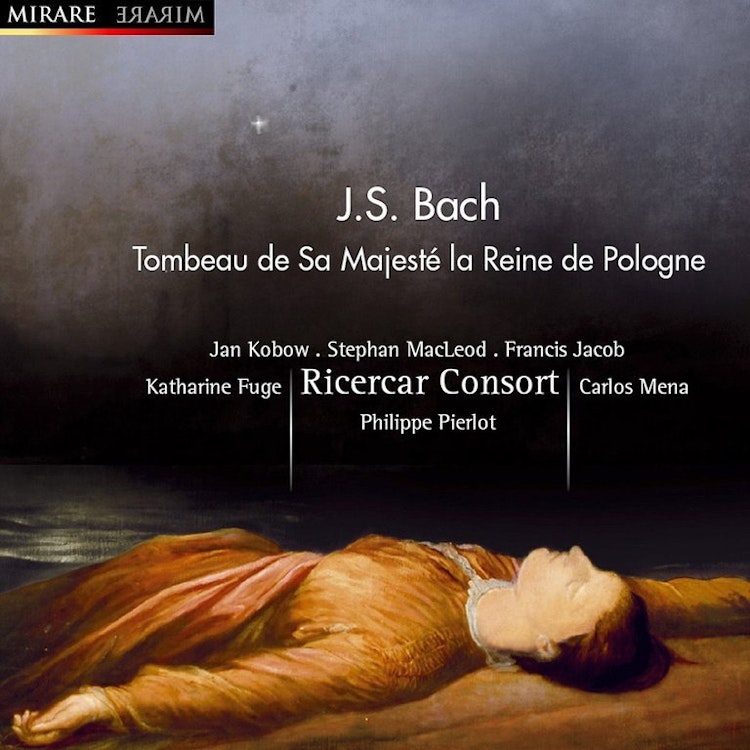
J.S. Bach: Tombeau de Sa Majesté la Reine de Pologne
9/2/2008, 21 Tracks, 1:18:17
Featuring
Katherine Fuge
Carlos Mena
Jan Kobow
Stephan MacLeod
Francis Jacob
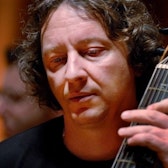
Philippe Pierlot
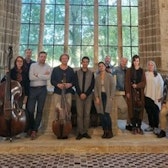
Ricercar Consort
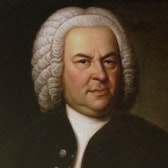
Johann Sebastian Bach
Did you know?
1/7
Compositional Technique
The instrumentation of Bach's 'Tombeau de S.M. la Reine de Pologne' is highly unusual, featuring pairs of transverse flutes, oboes, oboes d'amore, violas da gamba, and lutes, instruments traditionally associated with expressing grief.
Performer Biography
Philippe Pierlot, the director of the Ricercar Consort, is one of the few performers who plays the baryton, a little-known instrument for which Haydn composed nearly 150 works.
Compositional Technique
Bach's 'Tombeau de S.M. la Reine de Pologne' was structured like a 'catafalque in sound,' with an organ prelude, the first part of the cantata, a funeral oration, the second part of the cantata, and an organ fugue.
Compositional Technique
The closing fugue of the 'Tombeau de S.M. la Reine de Pologne' uses a Bohemian folksong theme about an unhappily married woman, a clear allusion to the princess's own life.
Historical Context
Princess Christiane Eberhardine, wife of August 'the Strong' (King of Poland), remained faithful to her Lutheran faith despite her husband's conversion to Catholicism, endearing her to the Saxons.
Composition History
Bach's 'Tombeau de S.M. la Reine de Pologne' (Mourning Ode) was commissioned by an aristocratic student, Hans Carl von Kirchbach, for a funeral ceremony in memory of Princess Christiane Eberhardine of Brandenburg-Bayreuth.
Recording & Production
The organ used for the Missa BWV 234 and the 'Tombeau de S.M. la Reine de Pologne' is a wooden table organ, built in 2003 by Luc and Larissa Meurice, inspired by 17th-century Italian and South German designs.
You might also enjoy...
Baroque Transcriptions: Trumpet & Organ (Baroque Transcriptions: Trompette & Orgue)
J.S. Bach: Orgel- und Cembalowerke, Kammermusik, Motetten
The Biggs Bach Book
J.S. Bach: The Complete Works for Keyboard, Vol. 5, "Toccata & Weimar 1708-1717"
Heinrich Bach: Sonatas & Organ Works
Copyright J.S.Bach
Buxtehude Collection
The Experts: The Bach & Silbermann Families
Christ lag in Todes Banden
Great Works for Organ & Harpsichord: Bach, Froberger, Weckmann, Scheidemann, Böhm and others
Böhm: Complete Harpsichord and Organ Music
Pergolesi, Monteverdi, Frescobaldi: Stabat Mater - Sacred Baroque Music