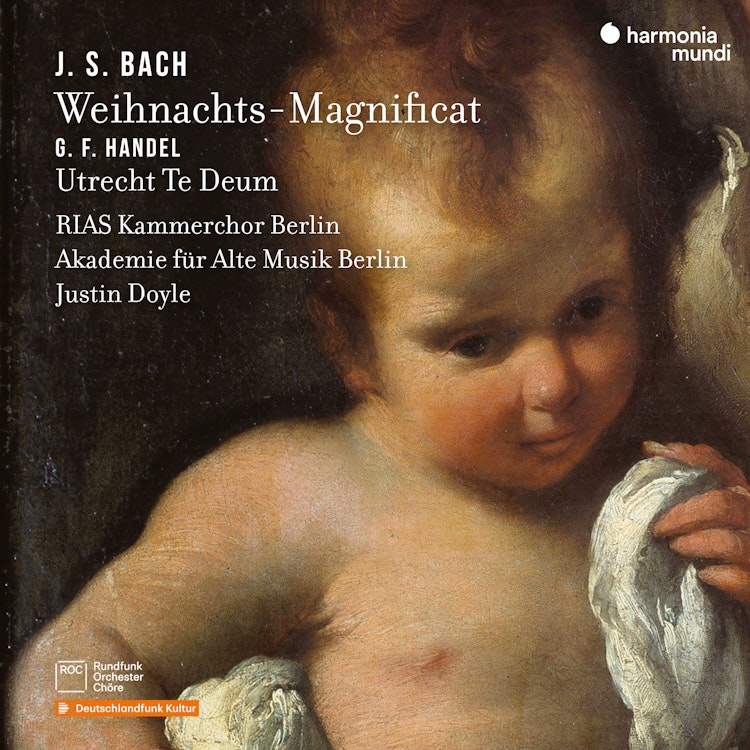
J. S. Bach: Weihnachts-Magnificat - G. F. Handel: Utrecht Te Deum
10/18/2024, 26 Tracks, 56:24
Featuring
Nuria Rial
Marie-Sophie Pollak
Alex Potter
Kieran Carrel
Roderick Williams
Justin Doyle
Akademie für Alte Musik Berlin
RIAS Kammerchor
Johann Sebastian Bach
George Frideric Handel
Did you know?
1/7
Composer Biography
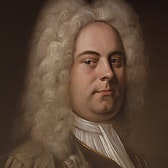
Georg Friedrich Händel, a non-English composer who had only recently arrived in London, was surprisingly commissioned to write the Te Deum for the Peace of Utrecht.
Composition History
Johann Sebastian Bach, upon becoming Kantor of St Thomas's Church in Leipzig in 1723, had to compose a large-scale Magnificat for his first Christmas in the city, as per local tradition.
Compositional Technique
For his Magnificat, Bach inserted four short settings of popular Christmas hymns between movements of the standard Magnificat text to emphasize the Nativity season.
Composition History
Handel's Te Deum for the Peace of Utrecht was commissioned for a thanksgiving service in St Paul's Cathedral to celebrate Great Britain's favorable outcome in the War of the Spanish Succession.
Historical Context
The War of the Spanish Succession, which lasted over a decade, ended with the Peace of Utrecht in April 1713, establishing a new balance of power in Europe.
Compositional Technique
Bach's Magnificat features an unusually large ensemble, including a five-part choir and a grand orchestra with timpani, trumpets, flutes, oboes, and strings.
Compositional Technique
Handel's Te Deum in D major (HWV 278) was his first sacred composition in English and was stylistically influenced by Henry Purcell's Te Deum of 1694.
You might also enjoy...
Lully: Dies Irae, Te Deum
Desmarets, H.: Dominus Regnavit / Te Deum
Schütz: Musikalische Exequien & Psalm 136
Bach, J.S.: Magnificat - A Bach Christmas
Schutz: German Requiem / Seven Last Words of Christ
Love Songs & Psalms
Schütz: Musikalische Exequien / Die Sieben Worte Jesu Christi am Kreuz