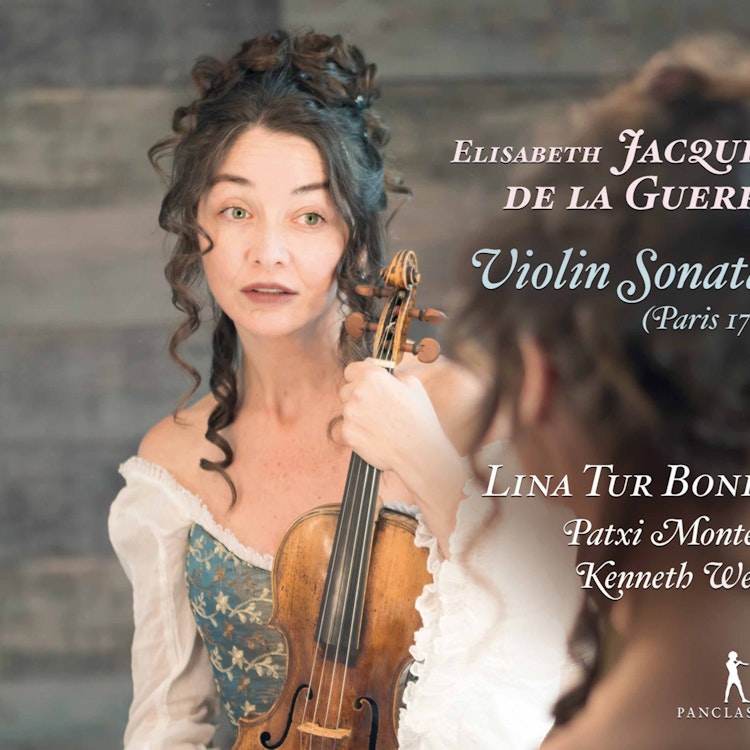
Although Elisabeth Jacquet de la Guerre's Sonates pour le viollon et pour le clavecin were printed in 1707, she had sent copies of at least two sonatas to her friend Sébastien de Brossard as early as 1695, making them among the first French violin sonatas.
Compositional Technique
The musical text of these sonatas arises from a continuous conflict between traditional composition, habitual ornamentation, and free experimentation, featuring changes of tempo and metre, harmonic daring, and sharp expressive contrasts.
Composer Biography
Elisabeth Jacquet de la Guerre, a harpsichordist, organist, singer, and composer, was introduced to the court of the Sun King (Louis XIV) at just five years old.
Composer Biography
The sonatas were likely published after Elisabeth Jacquet de la Guerre's period of reclusion, following the loss of most of her loved ones, including her only son, in a short time.
Composer's Artistic Vision
Elisabeth Jacquet de la Guerre's 1707 sonatas are characterized by their originality, sometimes daring harmonic sonorities, and a melodic style based on the principle of contrast.
Instruments
The harpsichord used in this recording is a copy of a Christian Vater (1738) instrument, made by Andrea Restelli in Milan in 2004.
Critical Reception
The French periodical Mercure galant, which followed Elisabeth Jacquet de la Guerre's career, once defined her as 'the marvel of our century,' capable of 'truly musical miracles.'
You might also enjoy...
Elisabeth Jacquet de la Guerre: Sonates pour le violon et basse continue
Biber: Violin Sonatas (1681)
Vivaldi Collection 2 RV 6-10 the World Premiere Recording All Vivaldi Violin Sonatas Baltic Baroque / Maltizov