The Grande Sonate (No. 3) was not publicly performed until 1862, six years after Schumann's death, by his protégé Johannes Brahms.
Composition History
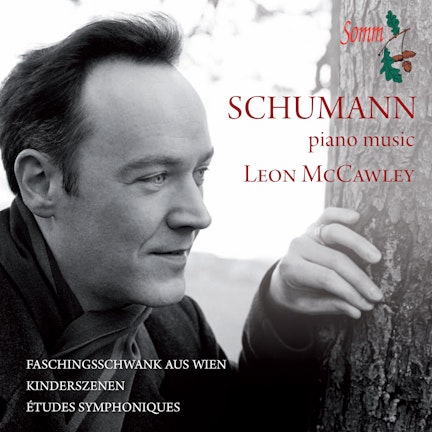
Schumann composed the first four movements of Faschingsschwank aus Wien (Carnival Jest from Vienna) during a trip to Vienna in 1839, adding the fifth upon his return to Leipzig.
Composition History
Schumann's Grande Sonate (No. 3) was originally a five-movement work, but his publisher persuaded him to remove two scherzos and retitle it Concert sans orchestre (Concerto without Orchestra) for its first publication.
Compositional Technique
The slow movement of Schumann's Grande Sonate (No. 3) is titled 'Quasi Variations on an Andantino by Clara Wieck,' featuring a theme by Clara Wieck, who was Schumann's wife and a brilliant young pianist.
Composer Biography
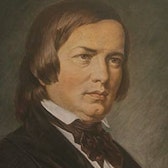
Robert Schumann, the composer, focused on one musical genre at a time, with his first 23 published works, plus Opp. 26, 28, and 32, all for solo piano.
Interpretation
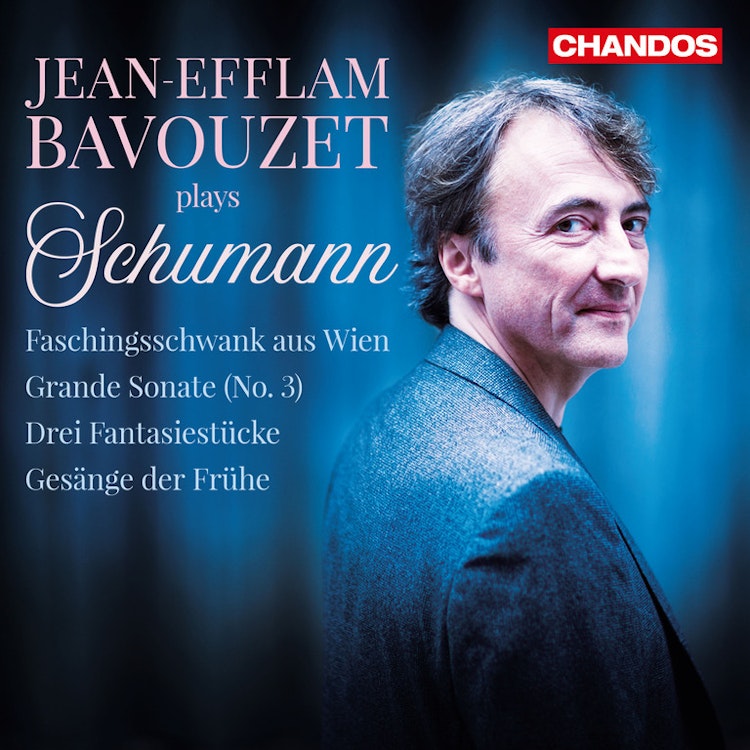
Pianist Jean-Efflam Bavouzet's recording of the Grande Sonate (No. 3) uses a hybrid version, mixing Schumann's 1834 and 1853 editions, inspired by Vladimir Horowitz's approach.
Compositional Technique
In Faschingsschwank aus Wien, Schumann mischievously inserts the opening phrase of La Marseillaise, which was banned from public performance in Vienna at the time.