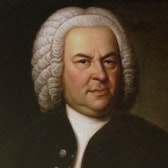
During his time as Thomaskantor in Leipzig, Bach explored the oboe d'amore, a larger oboe tuned a minor third lower, whose development was significantly aided by his close friend, instrument maker Johann Heinrich Eichentopf.
Composer Biography
Johann Sebastian Bach likely heard the oboe from a very young age, as his father, Ambrosius Bach, was a town musician in Eisenach who mastered all standard instruments.
Composition History
The Sonata in G minor BWV 1030b, originally for flute, is believed to have been composed by Bach for the oboe, as its lower key makes it unplayable on a transverse flute of his time.
Composition History
Bach's six trio sonatas for organ, the only set of his free organ music grouped into a cohesive cycle, were composed around 1730 to help his eldest son, Wilhelm Friedemann Bach, prepare to become a great organist.
Composer's Artistic Vision
Bach's early appreciation for the oboe's expressive power is evident in his compositions, using it as a solo instrument as early as 1707 and later as a standard in his cantatas.
Interpretation
This album addresses a gap in Bach's surviving works by offering chamber music arrangements of pieces not originally for oboe, bringing a fresh timbre to these compositions.
Historical Context
The oboe, originating in France, rapidly spread across Europe in the late 17th century, praised for its refined tone compared to its predecessor, the shawm.
You might also enjoy...
Biber: Imitatio
Christmas Treasures
L. & F. Couperin, Sainte-Colombe & Others: French Baroque Chamber Music