Telemann's decision to decline the position of Leipzig cantor allowed Johann Sebastian Bach to take the role, a 'little favour' that significantly altered music history.
Recording & Production
This album was recorded and released to commemorate the 40th anniversary of the 'Evenings with Telemann' festival, organized by the Castle Museum in Pszczyna.
Composer Biography
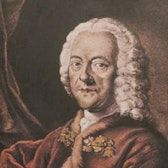
Georg Philipp Telemann, a German Baroque composer, served as court composer and conductor for Erdmann II von Promnitz, an owner of Pszczyna, and visited Pszczyna Castle several times in the early 18th century.
Composer's Artistic Vision
Telemann's music was significantly influenced by Polish folk music, which he encountered during his stays in Żary, Pszczyna, and a trip to Kraków.
Critical Reception
While Telemann was highly praised by his contemporary Johann Mattheson, the 19th century unfairly dismissed him as merely a 'skilled craftsman', a stark contrast to the respect later given to Bach and Handel.
Composition History
Telemann's multi-year stay at the court of Erdmann II von Promnitz resulted in many compositions that incorporate elements of Polish folk music, such as his 'Polish Concerto' and 'Partie Polonaise'.
Composition History
Two compositions on this album, Fantasia in G major No. 6 and Fantasia in G minor No. 7 for viola da gamba solo, were considered lost until they were unexpectedly rediscovered in a private collection three years prior to this recording.
You might also enjoy...
The Trio Sonata Through Two Centuries
The Unknown Handel
Handel: Trios, Sonatas And Concerti For Diverse Instruments
Chamber music by the sons of Bach
Telemann Edition, Vol. 3
Splendeurs de Versailles (Collection Château de Versailles)