Christian Ignatius Latrobe, a leading member of the Moravian Church, refined his musical skills during theological studies and was personally introduced to Joseph Haydn in 1791 by Charles Burney.
Compositional Technique
Joseph Haydn's London Sonatas, such as Hob. XVI:52 and Hob. XVI:50, were inspired by the powerful sound of English grand pianofortes and the flamboyant, virtuoso piano style of London's pianists.
Recording & Production
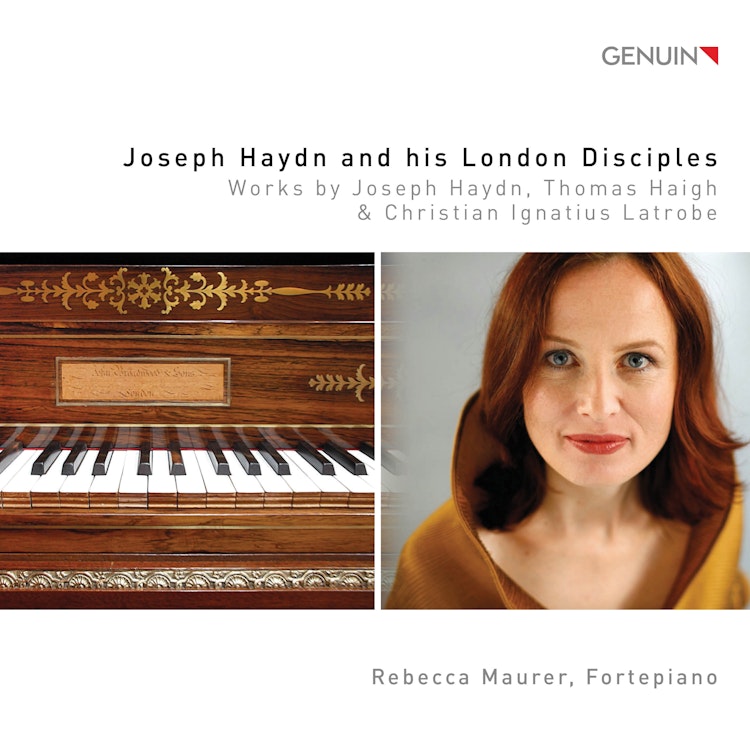
The fortepiano used for this recording is a John Broadwood & Sons from 1816, which is considered very special and luxurious, not typical of the norm for its time.
Composition History
Thomas Haigh, a pianist and violinist, created numerous piano arrangements of Joseph Haydn's symphonies and opera overtures, meeting the demand for works playable in drawing rooms and salons.
Historical Context
When Joseph Haydn first arrived in London in 1791, he was surprised by his immense popularity, with ladies even wearing gold-embroidered ribbons with his name in their wigs.
Composer Biography
Joseph Haydn, the renowned composer, once described himself as having been trapped for years as a 'slave' in the 'wasteland' of the Hungarian province.
Instruments
The 'open Pedal' instruction in Haydn's C-major Sonata, which creates an 'ethereal' sound on a historical English Broadwood fortepiano, would result in 'tonal chaos' on a modern piano.