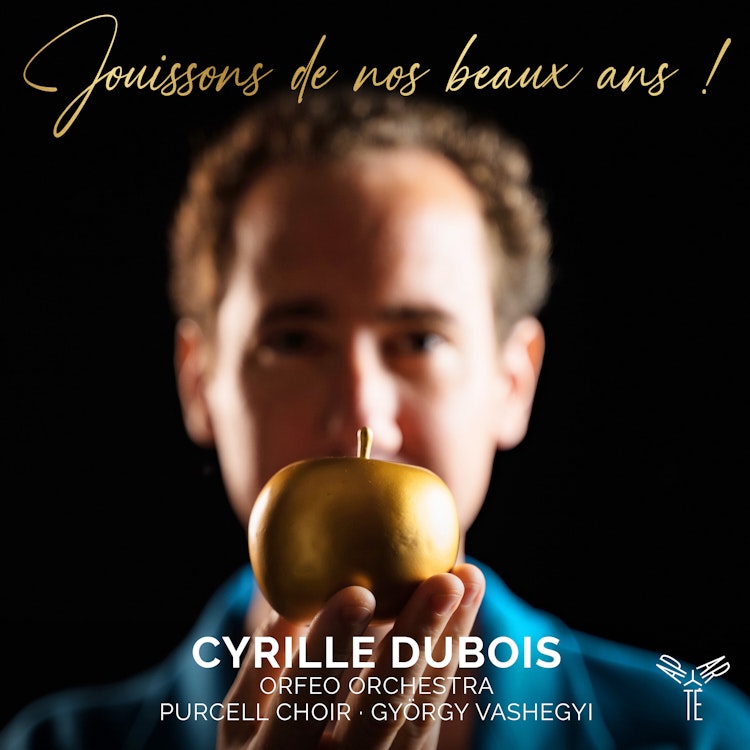
The album title, "Jouissons de nos beaux ans!" (Let us enjoy our finest years!), echoes Horace's Carpe diem, urging listeners to appreciate the present and life's immediate pleasures.
Historical Context
The haute-contre, an ancestor of the modern light tenor, was a primary voice type in French Baroque opera from its creation in 1673 until the French Revolution.
Interpretation
This recital aims to uncover lesser-known works from the French heritage, paying tribute to composers overshadowed by Rameau but whose music is still appealing.
Recording & Production
This album is a co-production of Filharmónia Magyarország Ltd., Orfeo Music Foundation, and the Centre de musique baroque de Versailles, with support from the Hungarian Ministry of Human Capacities.
Compositional Technique
Contrary to later ideas, the 18th-century haute-contre was a strong, sonorous voice that used only the chest voice in its high register, unlike the Italian Baroque tenore which used falsetto.
Historical Context
The high tessitura of the haute-contre became prominent in the 1720s with Louis Murayre, the principal haute-contre of the Paris Opéra, followed by a line of artists until 1783.
Compositional Technique
The haute-contre voice, a distinctive feature of 18th-century French style, is explored in this program, showcasing its use in opera as heroic, elegiac, or pyrotechnic.