Kinsella experienced a stylistic crisis in 1977, leading him to stop composing for 18 months, after which he resolved to find his own distinctive creative voice.
Composition History
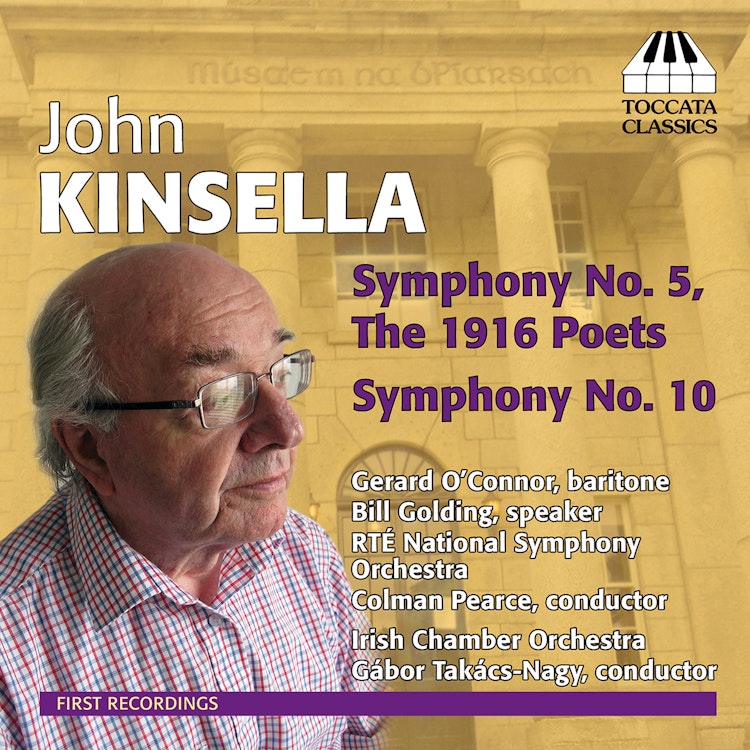
Symphony No. 5, subtitled 'The 1916 Poets', draws on the work of three poets—Patrick Pearse, Thomas MacDonagh, and Joseph Mary Plunkett—who were executed after the 1916 Easter Rising.
Compositional Technique
Symphony No. 5 uniquely integrates spoken text into its symphonic structure, with words delivered by both a baritone soloist and a speaker.
Composer Biography
John Kinsella retired early from his position as Head of Music at RTÉ (Ireland's national broadcaster) in 1988 to dedicate himself fully to composition.
Composer Biography
John Kinsella, born in Dublin in 1932, is largely self-taught as a composer, having initially studied viola, harmony, and counterpoint.
Performer Biography
Bill Golding, a baritone and actor, is known for his extensive career in Irish theatre and for his voice-over work, including for 'Mister Kipling' cakes.
Composition History
Unlike his other symphonies, Kinsella's Symphony No. 10 was not commissioned but arose solely from his personal creative impulse, allowing him to work without a deadline.
You might also enjoy...
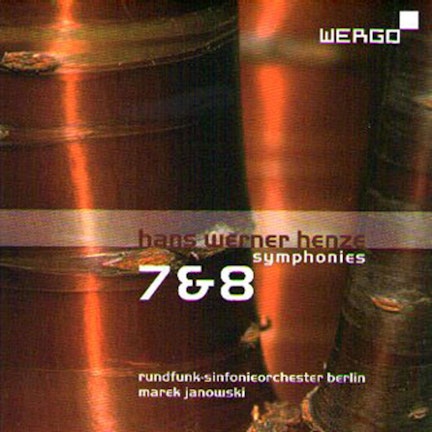
Henze: Symphonies No. 7 & 8
Torbjörn Iwan Lundquist: Symphonies Nos. 5 & 8
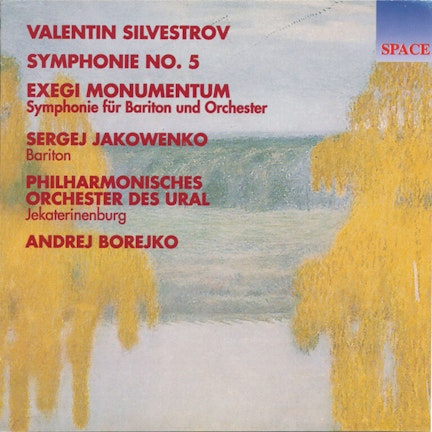
Valentin Silvestrov: Orchestral Works
Stravinsky: Symphonies
Stravinsky: Symphony in 3 Movements / Symphony in C / Symphony of Psalms
Langgaard, R.: Symphonies Nos. 12, "Helsingeborg", 13, "Undertro" and 14, "Morgenen"
Langgaard, R.: Symphonies Nos. 4, "Lovfald" and 5, "Steppenatur" (2 Versions)
Stravinsky: Symphony of Psalms, Symphony in C; Symphony in Three Movements