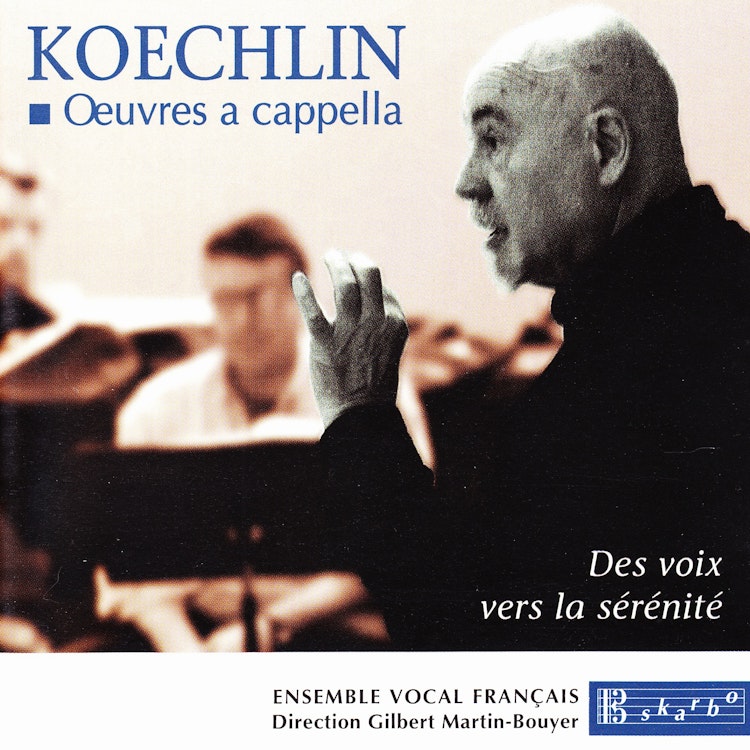
Charles Koechlin was long known for his theoretical work taught in conservatories worldwide, but his stature as a composer is now recognized for his abundant and high-quality musical output.
Interpretation
The interpretation of Koechlin's motets presents challenges due to his desired slow tempi, the need for choir homogeneity with equally important voices, and individualizing the character of each motet.
Composition History
The 15 Motets de style archaïque (op. 225) are Charles Koechlin's last work, begun in June 1949 after he was inspired by a concert in Dijon, and continued with motets without words.
Composer Biography
Koechlin's turn towards contrapuntal discipline, essential in his later works, developed from teaching and writing treatises to support his large family, leading him to enjoy and master polyphonic writing.
Compositional Technique
Koechlin's compositional style, while rooted in the tradition of Bach, features freedom in chord progressions, new note clusters, and remote modulations, creating a unique musical language.
Composer's Artistic Vision
Koechlin, guided by his musical instinct, aimed to express what he loved as well as possible, with complete faith in the beauty of nature and mankind.
Compositional Technique
Koechlin's motets, while titled 'a cappella', include a wind quartet treated as four additional voices, referencing the ancient tradition where instruments could accompany voices.
You might also enjoy...
Into Light
Pärt: And I Heard a Voice…
Stephen Paulus: Far in the Heavens
Schnittke: Penitential Psalms / Voices of Nature
Max Reger: Melancholy (Vocal Works)
Langgaard: Rose Garden Songs
Dormi Bel Bambin
Zemlinsky: Psalmen/Complete Choral Works
The Glory and the Dream: Choral Music by Richard Rodney Bennett