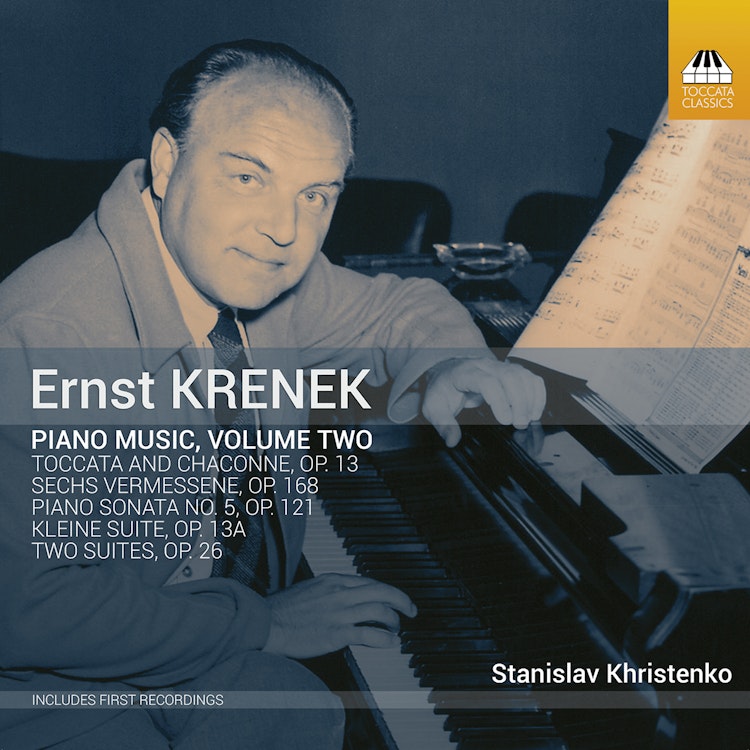
The two Suites, Op. 26, featured on this album are first recordings.
Composer Biography
Ernst Krenek, the composer, considered the piano to be "the key to music" because it allowed him to reproduce any musical work, from a solo contrabass sonata to a complex opera score.
Critical Reception
Krenek's Op. 13a suite, which included a Foxtrott, was condemned by hostile critics for blasphemously dragging a sacred theme through "dissolute, obscene jazz rhythms."
Compositional Technique
The Sechs Vermessene, Op. 168, explores serial organization not only for pitch but also for rhythm and pitch-density, leading to a paradoxical outcome where the music can sound improvisatory.
Compositional Technique
The term 'Vermessene' in the title Sechs Vermessene has a double meaning in German, signifying both 'measured' (thought out) and 'self-willed.'
Cultural Impact
Krenek's 'invented' works, Op. 13 and Op. 13a, may have inspired the monumental last composition in Thomas Mann's novel Doktor Faustus, which is also based on a twelve-syllable text.
Composition History
The Toccata und Chaconne über den Choral 'Ja ich glaub' an Jesum Christum', Op. 13, was a musical "fake" created by Krenek and pianist Eduard Erdmann to trick critics into commenting on a non-existent chorale.
You might also enjoy...
Still: A Deserted Plantation
Forbidden Music
Gianneo: Piano Sonatas Nos. 2 and 3 / 6 Bagatelles
Gianneo: Piano Sonatas Nos. 2 and 3 / 6 Bagatelles