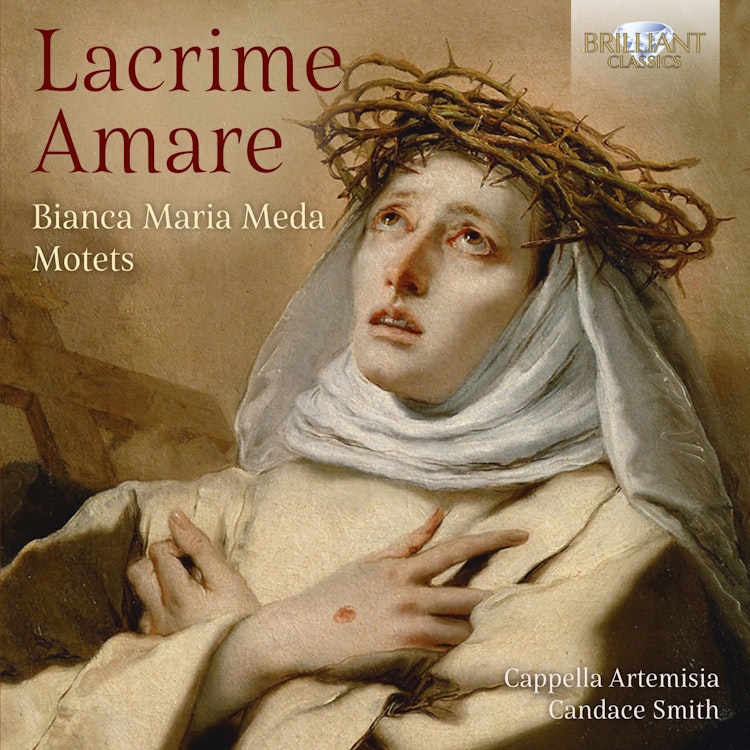
This album is the ninth recording by Cappella Artemisia, an ensemble dedicated to performing Italian convent music of the 16th and 17th centuries.
Interpretation
This recording transposes the bass parts up an octave to be sung by altos, a practice well-documented for convent music, as Meda may have intended.
Historical Context
Meda was one of the last nun composers in Italy to have her work printed in the 17th century, followed only by Isabella Leonarda, an Ursuline nun.
Composer Biography
Bianca Maria Meda was a Benedictine nun at the monastery of San Martino del Leano in Pavia, Italy.
Compositional Technique
Meda's motets feature a wide range of vocal lines and difficult instrumental parts, indicating that the musicians in her convent were highly skilled.
Composition History
Bianca Maria Meda's Mottetti a 1, 2, 3, e 4 voci, con violini, e senza, published in 1691, are the only known compositions by her.
Composer's Artistic Vision
The texts of Meda's motets are written in the first person feminine, expressing an intimate relationship between the speaker and Christ, suggesting they were written by a cloistered nun.
You might also enjoy...
Schelle: Sacred Concertos & Cantatas
40 Years DHM - Mythomania (16th Century)
Sol y Sombra
Christmas Music (Bright Day Star - Music for the Yuletide Season)