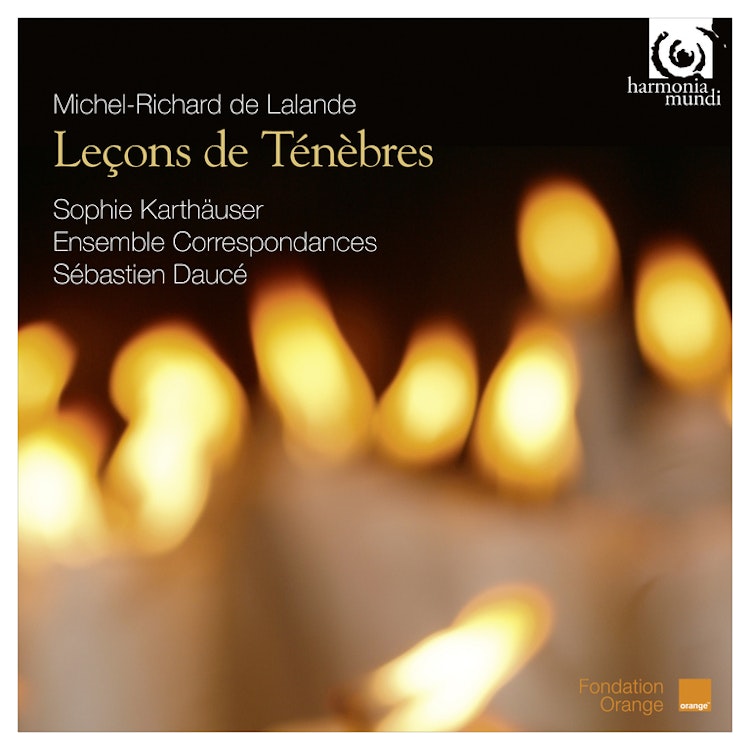
Michel-Richard de Lalande, a prominent French Baroque composer, held multiple prestigious positions in the Musique de la Chambre du Roi, including Composer, Superintendent, and Master.
Composition History
Lalande's Leçons de Ténèbres and Miserere for solo voice and continuo were composed for the Holy Week Offices, a popular genre of sacred music during the Grand Siècle.
Compositional Technique
Lalande's Leçons de Ténèbres use contrasting musical affects, indicated by various tempo and expression marks like 'rondement' (briskly) and 'affectueusement' (affectionately), and include short continuo postludes for meditation.
Composition History
Lalande's two daughters, Marie-Anne and Jeanne, both noted singers, performed his Leçons de Ténèbres for the Augustinian nuns of the Couvent de l'Assomption in Paris.
Historical Context
The 'Offices des Ténèbres' featured a quasi-theatrical liturgy, including the gradual extinguishing of fifteen candles symbolizing the twelve apostles and three Marys, to heighten spiritual intensity.
Historical Context
During Holy Week, 'Offices des Ténèbres' (Tenebrae) were major social events, attracting large audiences due to performances by fine singers and rich continuo accompaniment, despite a papal ban on other instruments during Lent.
You might also enjoy...
Gesualdo: Tenebræ Responsoria, Feria Quinta
Mitt hjerte alltid vanker (Arr. Eggen)
Praetorius: Mass
Lejeune: Dix Pseaumes de David
Gesualdo: Tenebrae Responseries For Maundy Thursday
La Pellegrina
Victoria: Requiem Mass
Padovano: Domine a lingua dolosa a 5
Passio Domini Nostri Jesu Christi Secundum Johannem