Orlando di Lasso was appointed maestro di cappella at the Basilica of St John Lateran in Rome in 1553, a significant early post in his career.
Compositional Technique
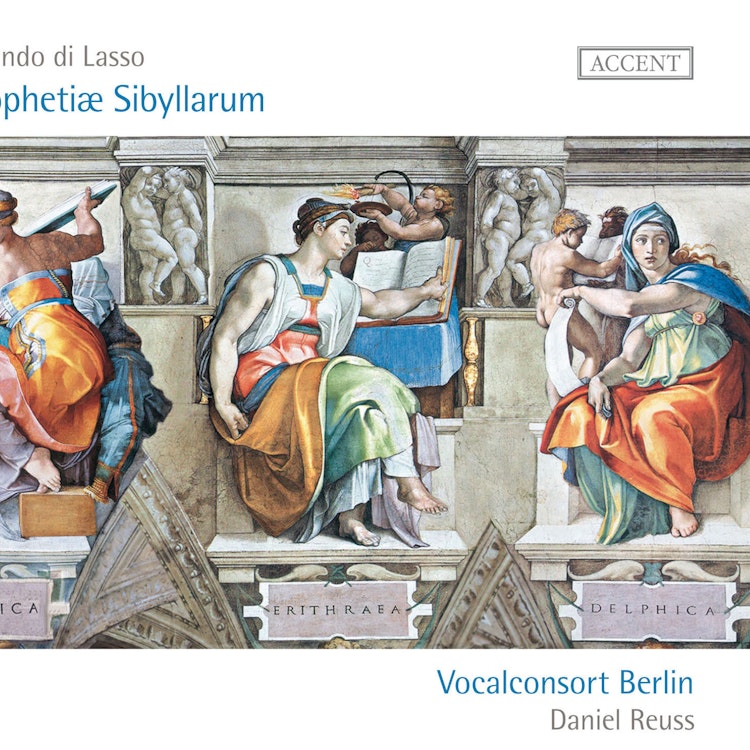
A frequent stylistic device in Lasso's Prophetiæ Sibyllarum is chromaticism, where he juxtaposes disparate harmonies to enhance expression, as referenced in the Prologue's 'Carmina chromatico'.
Composer's Artistic Vision
Duke Albrecht V commissioned several extensive work cycles from Lasso, which were not permitted to be published, intended exclusively for court performance as 'musica riservata'.
Composition History
Lasso's motet cycle Prophetiæ Sibyllarum, composed around age 25, is based on twelve ancient texts interpreted as pre-Christian prophecies, with the Sibyls considered divine prophetesses.
Composer Biography
Orlando di Lasso was discovered by Ferrante Gonzaga, the Viceroy of Sicily, who took the musical youth into his entourage during a journey through the Netherlands.
Composer Biography
Orlando di Lasso, one of the most popular and respected musicians of the 16th century, was a choir boy at the church of St Nicolas in his hometown of Mons.
Composer Biography
Lasso settled in Munich in 1556, joining the court chapel of Bavarian Duke Albrecht V, and remained director of music there for almost 40 years until his death.
You might also enjoy...
Palestrina : Missa pro defunctis & Motets
Tallis, Tye, Sheppard: Audivi Vocem
Ockeghem: Missa Prolationum, 5 Motets
Plorer, gemir, crier... Hommage à la "voix d'or" de Johannes Ockeghem
Choral Masterpieces Of The Renaissance
Palestrina Volume 6
Sing with the Voice of Melody (10th Anniversary)
Josquin des Prez: Miserere mei Deus
Palestrina: Missa Aeterna Christi munera & Other Sacred Music