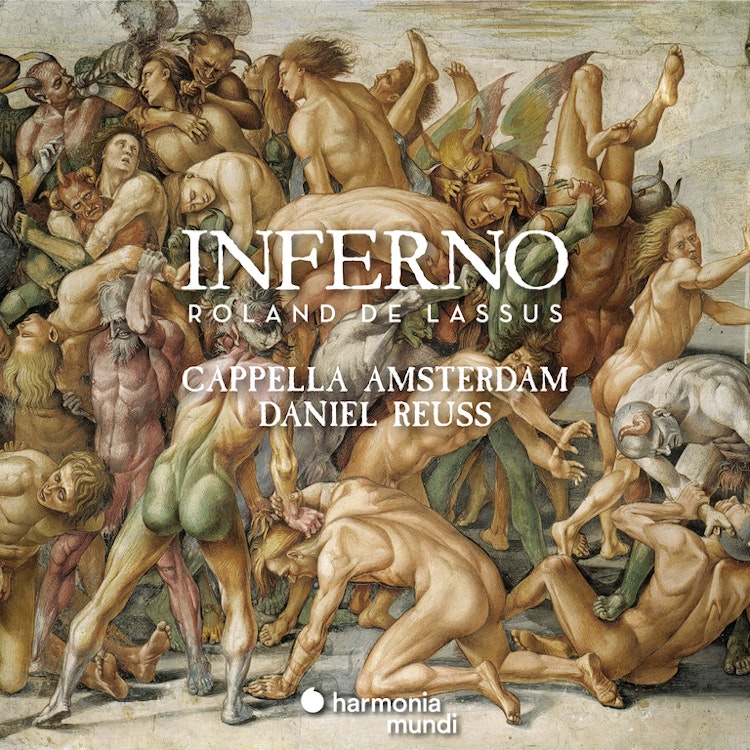
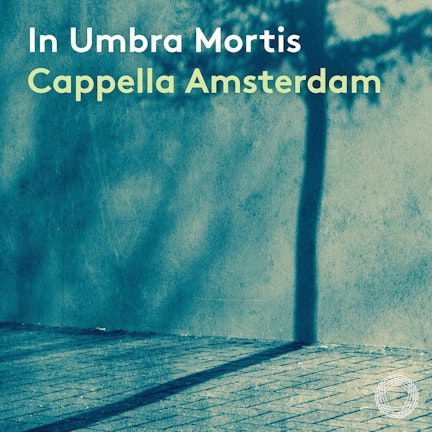
Orlando di Lasso, one of the most important composers of the late Renaissance, wrote some deeply melancholic motets towards the end of his life that are both moving and masterful. Twelve of these sacred works are collected together by Capella Amsterdam and their artistic director Daniel Reuss under the evocative title “Inferno”.
Featuring
Daniel Reuss
Cappella Amsterdam
Orlando di Lasso
Anonymous (Gregorian Chant)
Did you know?
1/7
Composer's Artistic Vision
While Lassus's secular music often shows overflowing vitality, the motets on this album illustrate his capacity for deep melancholy, with most composed in his later years.
Composer Biography
Lassus was highly admired by his contemporaries, with poet Ronsard calling him 'the more than divine Orlande,' and he excelled in every vocal genre.
Compositional Technique
Lassus sometimes employed traditional compositional techniques, such as in "Libera me," where a second tenor sings an ostinato motif nine times to structure the work.
Composition History
Less than a month before his death, Lassus signed the dedication for his "Lagrime di San Pietro" (Tears of St Peter), a collection of spiritual madrigals, to which he added the motet "Vide homo."
Compositional Technique
Sixteenth-century sources do not specify the exact vocal or instrumental forces intended for a composition, leaving interpretation to modern performers.
Compositional Technique
In works like "Omnia tempus habent," Lassus uses a homorhythmic texture where words are sung simultaneously by all voices, emphasizing text intelligibility.
Composer Biography
Roland de Lassus, born in Mons in 1530, was recruited as a choirboy for Ferrante Gonzaga, a military leader, and later became maestro di cappella of St John Lateran in Rome.
You might also enjoy...
Sublime Ingegno (Josquin Desprez, l'homme armé)
Giaches de Wert: Divine Theatre, Sacred Motets
Orlando di Lasso: Chansons, Madrigale, Lieder
Lasso: Magnum opus musicum
Josquin: Missa Mater patris - Bauldeweyn: Missa Da pacem
Byrd: Infelix ego & Other Sacred Music (Byrd Edition 13)