Debussy's Études are not only virtuoso exercises but also compositional studies, exploring pure sound, single intervals, and specific pianistic gestures, rather than external catalysts.
Cultural Impact
Two years after Debussy's death, the Revue musicale dedicated an issue to him, publishing ten compositions by various composers, including Stravinsky and Ravel, under the title Tombeau de Claude Debussy.
Composition History
Debussy's Twelve Études were composed in a burst of creativity between August 5 and September 29, 1915, during a stay at 'Mon Coin' villa near Dieppe.
Composition History
Claude Debussy wrote his Berceuse héroïque in response to an appeal from writer Hall Caine for an homage to the heroic King Albert I of Belgium during World War I.
Composer's Artistic Vision
Debussy initially considered dedicating his Études to either Frédéric Chopin or François Couperin, expressing equal gratitude for both masters.
Historical Context
Claude Debussy died on March 26, 1918, amidst World War I, with his funeral being discreet due to the press being preoccupied with war reports.
Instruments
The album features a 1892 Erard concert grand piano, restored by Chris Maene, which represents the last and most sophisticated pianos in the 19th-century tradition with straight, parallel strings.
You might also enjoy...
Christian Wolff: Early Piano Pieces
Cage: Works for 2 Keyboards, Vol. 3
French Piano Rarities
Feldman: Palais de Mari – Crumb: A Little Suite for Christmas
Silvestrov: Piano Sonatas & Cello Sonatas
Rihm: Klavierstücke Nos. 1, 2, 4, 5 & 7
Pintscher: On a Clear Day
5
Arefa
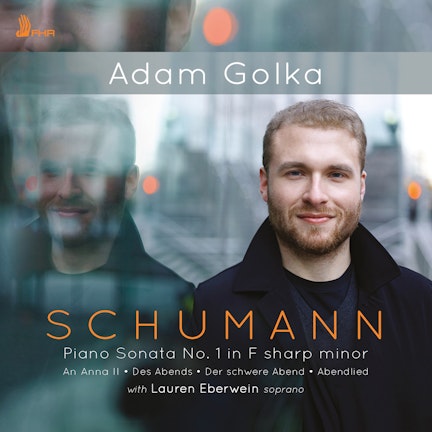
Schumann: Piano Sonata No. 1 in F-Sharp Minor, Op. 11