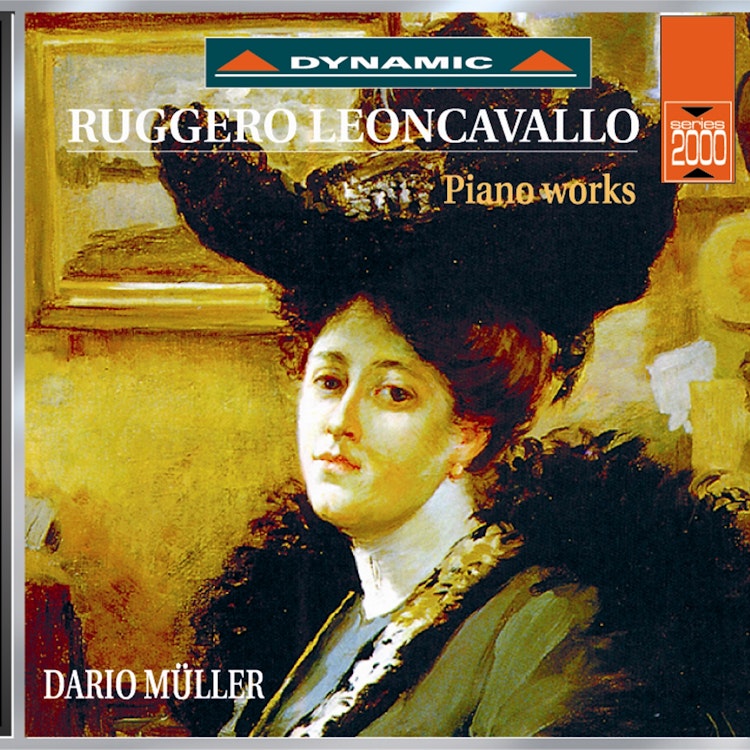
Ruggero Leoncavallo, the composer of these piano works, lived in Paris from 1882 to 1889, earning a living by teaching singing and playing piano in cafés.
Compositional Technique
Some pieces, like "Menuet d'Arlequin" and "Cortège de Pulcinella," draw inspiration from the stylized situations and feelings of Commedia dell'arte.
Compositional Technique
Leoncavallo's piano works often show a strong influence of French musical culture, despite their brevity.
Performer Biography
Dario Müller, the pianist on this recording, studied with Ilonka Deckers and Jürg von Vintschger, and also received lessons from the renowned Arturo Benedetti Michelangeli.
Composition History
The pieces "Papillon" and "Invocation à la Muse" are piano transcriptions of movements from Leoncavallo's 1886 symphonic poem "La nuit de mai," based on a poem by Alfred de Musset.
Compositional Technique
Other works, such as "Sérénade napolitaine" and "Tarantelle," incorporate popular songs and dances, reflecting a taste for local folklore or exoticism.
You might also enjoy...
Rarities of Piano Music - Live Recordings from the Husum Festival 2017
Salon Mexicano
Conversations with Bill Evans
Browns in Blue [iTunes Exclusive]
Stevenson: Piano Music
Global Sirens
Piazzini Plays Piazzolla
Piano Recital: Glazier, Richard - Wild, E. / Gershwin, G.
Minimal Piano Collection: Volume XXI-XXVIII
Rarities of Piano Music at 'Schloss von Husum' 2025
Piano Music - Nancarrow / Bolcom / Carter, E. / Sahl, M. / Hemphill / Adams, J. / Foss / Rzewski / Wuorinen / Picker / Harbison