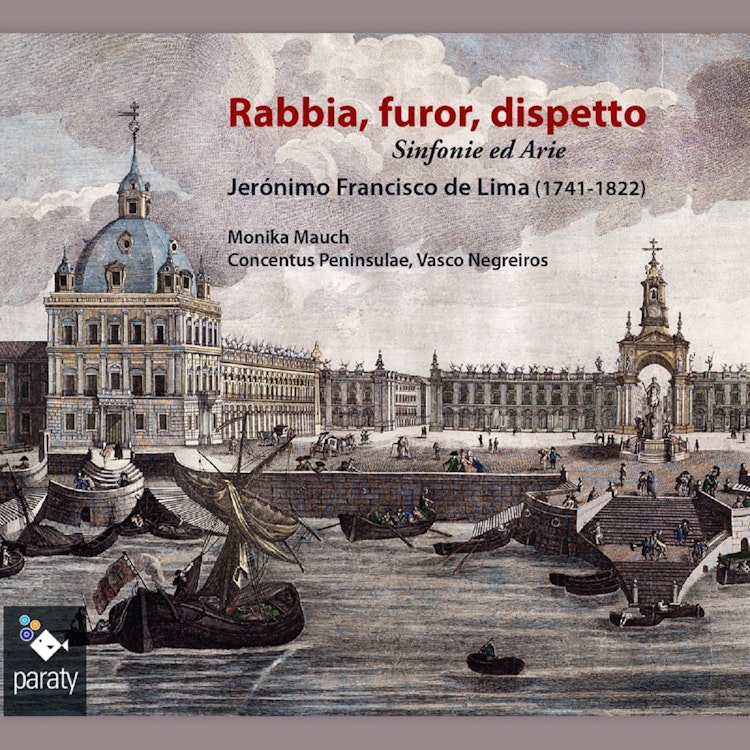
Lima's operatic output was extensive, with copyists leaving 3,681 pages of scores for his secular dramatic repertoire, in contrast to only about twenty sacred works.
Composer Biography
D. José I sent Lima to study in Naples, a major training center for composers, where he studied from 1760 to 1767.
Compositional Technique
Lima's overtures often integrated character traits or plot elements, such as musical mirroring of a Countess's contradictory spirit or a Governor's false Latin, a sophisticated device uncommon for his time.
Historical Context
The Royal Court Opera was a fundamental part of the reigns of D. José I and D. Maria I in Portugal, even after the 1755 earthquake destroyed Lisbon's magnificent opera house.
Composer's Artistic Vision
Lima's instrumental writing was not merely harmonic support for singers; it played a prominent role, a characteristic likely influenced by his training in Naples.
Recording & Production
This recording includes sound effects from replicas of 18th-century theatre machines, added to the sea tempest scene in La Vera Costanza, in homage to historical sonoplastic art.
Composer Biography
Jerónimo Francisco de Lima, a Portuguese composer, was considered by the English music enthusiast William Beckford to be "one of the Queen's [D. Maria I] first composers."