Liszt's Miserere d'après Palestrina, a short piece, creates a vibrant effect through increasing complexity in its three statements of the theme, moving from chordal to tremolo to arpeggiated writing.
Composition History
Liszt's Harmonies poétiques et religieuses is dedicated to Princess Sayn-Wittgenstein (1819-1887), a close friend who lived in extreme religious devotion.
Composition History
The piece Funérailles from Liszt's Harmonies poétiques et religieuses is a reference to the tragic events of the 1848-1849 Hungarian War of Independence, during which Liszt lost close friends.
Composer's Artistic Vision
Liszt, a lifelong Catholic, believed his increasing Christian faith would lead him to a 'better music-conscience' and help him fulfill his artistic task.
Performer Biography
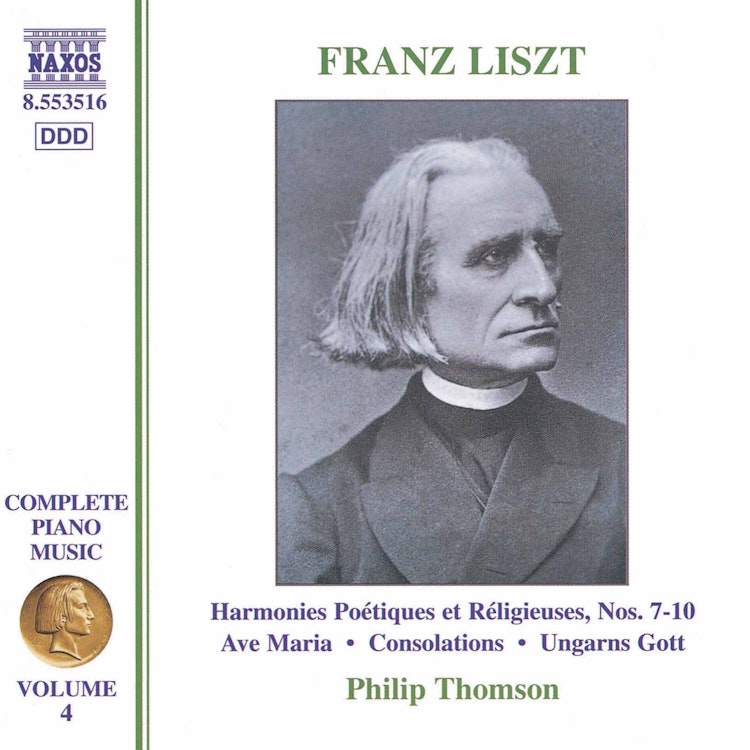
Philip Thomson, the performer on this album, is a Liszt specialist who arranged, performed, and recorded the until then uncompleted De profundis for piano and orchestra with the Hungarian State Orchestra.
Composer Biography
Franz Liszt (1811-1886) was a child prodigy who captivated audiences for over sixty years, giving his first public performance at age nine and his last at seventy-four.
Composition History
Liszt's Consolations, a set of six short pieces, were inspired by the poems of historian and poet Joseph Delorme (Charles Sainte-Beuve (1804-1869)).
You might also enjoy...
Liszt: Années de Pèlerinage II - Late Piano Works
Liszt: Between Light & Darkness
Liszt: Sonata in B minor, Légendes, La lugubre gondole
Liszt: Piano Works
Liszt: An Italian Recital
Liszt: Années de pèlerinage, 3ème année & Other Late Piano Works
Liszt: Angelus Sacred Piano Music
Liszt: Sonata in B Minor - Piano Works
Liszt: Sonate en si mineur
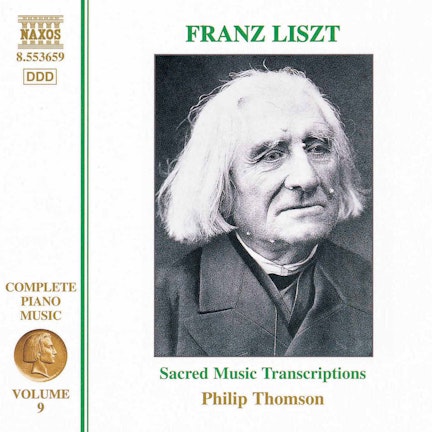
Liszt: Sacred Music Transcriptions
Liszt: Piano Sonata in B minor; Nuages gris; La notte; La lugubre gondola II; Funérailles
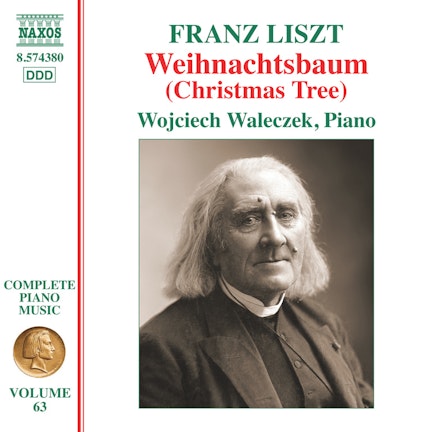
Liszt: Complete Piano Music, Vol. 63: Weihnachtsbaum