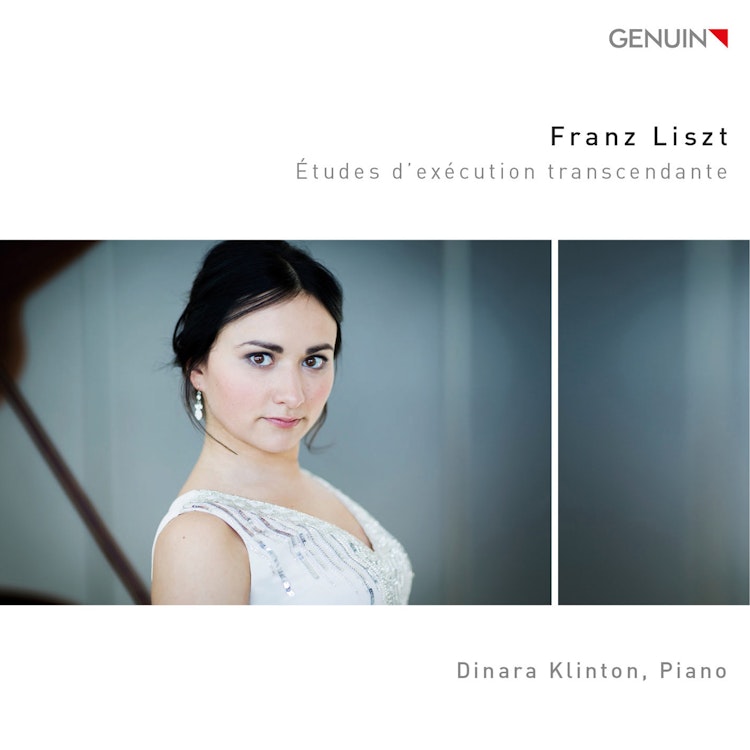
Dinara Klinton, the pianist on this recording, began piano lessons at age five and won the Vladimir Krainev Competition at age eight.
Composer's Artistic Vision
Dinara Klinton finds Liszt's music fascinating for its "bracing sense of freedom, its supreme confidence and complete lack of inhibition," feeling that anything is possible when playing it.
Compositional Technique
The Études d'exécution transcendante were not given their individual programmatic titles until the third edition was published in 1851, with the exception of Mazeppa and two untitled pieces.
Critical Reception
Robert Schumann, a German composer and critic, commented that Liszt's Grande Études were "true tempest and horror etudes" suitable for only ten or twelve pianists worldwide.
Composition History
Liszt originally planned a compendium of 48 studies in every major and minor key, inspired by Johann Sebastian Bach's The Well-Tempered Clavier.
Interpretation
Dinara Klinton approaches the Transcendental Études like a director staging twelve independent theatre pieces, with each actor (étude) playing out its scenario according to her vision.
Composition History
Franz Liszt's Études d'exécution transcendante are the culmination of a 25-year creative process, starting when he was 15 years old.
You might also enjoy...
Franz Liszt: Études d'exécution transcendante
Liszt: 12 Etudes d'exécution transcendante
Liszt: Études d'Execution Transcendante
Liszt: Operatic Transcriptions
Liszt: Donizetti Opera Transcriptions
Liszt Paraphrases
Claudio Arrau Plays Beethoven, Schumann & Liszt (Live)
Liszt : 4 Mephisto Waltzes, B�n�diction & Variations on 'Weinen, Klagen, Sorgen, Zagen'
Liszt: Fantasies, Reminiscences and Variations On Themes by Bellini
Liszt: The Complete Etudes
Liszt: Piano Sonata in E minor, 6 Paganini Etudes, Mephitso Waltz No.1
Sándor Plays Liszt
Liszt: Grandes études de Paganini, S. 141 & Études d'exécution transcendante d'après Paganini, S. 140